
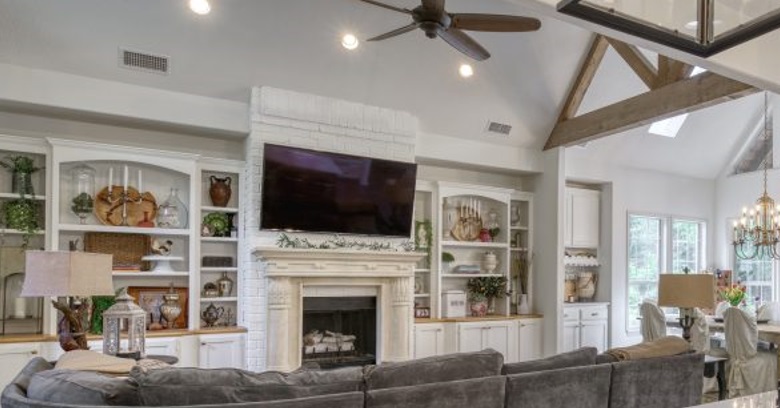
Searching for Home Remodeling Contractors in College Station Texas?
Good Company Construction pulls the plans, the permits, and the subcontractors together under one plan for College Station Texas residents.
Dial 979-401-2527 to ask how a project like yours would be run.
What a General Contractor Actually Does
People who look into Home Remodeling Contractors in College Station Texas finds that one name stands for many different tasks. A single contractor is accountable for the project as a whole. It lines up the trades and the deliveries, and it stands behind how the finished work fits together.
That is a different job from doing any single trade, and it is the part owners tend to underestimate. Every trade has its own tools, methods, and rules, yet the project is won or lost on how smoothly the pieces connect. For Home Remodeling Contractors, Good Company Construction focuses on keeping every part of the project connected, and every phase is planned with the next one in mind.
Who Draws the Plans, and Who Builds Them
Under a design-build approach, design and construction sit under the same roof and the same contract. That lets practical questions about structure and sequence shape the design early, and decisions move faster because nobody is passing the plans back and forth.
Some owners prefer to have the plans drawn independently, and it has been used for many successful projects. The design stands on its own as a finished package, which makes sense when the architecture is the main goal. It comes down to what the owner values most, and a conversation about Home Remodeling Contractors in College Station Texas can start from either one.
What an Addition Changes About a House
An addition to an existing home is not a freestanding building. Two foundations of different ages move differently, and the connection has to allow for that, and flashing and slope at the junction decide whether it stays dry. The air conditioner and ductwork may need to grow with the house, and the equipment should be sized by calculation rather than guesswork.
The frame carries the whole job, and the rest of the job depends on it. A frame laid out accurately and checked against the plans make trim, cabinets, and doors fit without fuss. Contractors who do this daily know, and the point is that mistakes in the frame travel all the way to the paint.
Why the Outside of an Addition Deserves Planning Too
An addition that is built well can still look out of place, when the roof pitch, siding, and window style were not carried through. Old siding and brick fade in the sun, which makes a perfect match difficult, and the plan has to choose whether to match closely or to set the new section apart on purpose.
The roof is usually the first thing that shows a poor match, and it affects both looks and leaks. Keeping the same slope and overhang makes the whole building read as one design, and it limits the number of awkward valleys where leaves and water collect.
Mechanical Systems Have to Grow With the House
New space means more load on the equipment that was installed for less, and it adds up faster than most owners expect. Cooling capacity tends to be the system that shows a shortfall soonest, and it is usually easier to plan for that during design than to correct it afterward. Wiring and plumbing have capacity limits of their own, and a quick check can save a lot of rework.
Renovating or Redesigning Across the Entire Home
Work that touches every room brings the flow of the entire house into the plan. Some owners stay in the house during the work, and others move out, and the schedule should reflect that choice from day one.
Houses of a certain age may hold hidden conditions, and it is rarely a reason to avoid the work. Past repairs, past additions, and past shortcuts are usually discovered during demolition. Telling the owner early that surprises are possible help the whole job go more smoothly.
Plans, Permits, and the Paperwork Behind a Larger Project
The larger the project, the more important it is to learn what the town requires. Every jurisdiction in the state decides for itself what work needs a permit, and the builder in charge typically handles the application. Associations often want to see plans for exterior work first, and that approval can take a while.
A Short List of Things to Settle Before Signing Anything
Picking a contractor for an addition or remodel comes down to both the formal side and the working relationship. A sensible first question is who handles the approvals from the local office, and ask who will be on the job day to day and who the owner can reach.
Ask to see the paperwork the town requires, and expect the scope of work and the timeline to be written down clearly. A contractor with a steady process can generally explain how each one is handled.
Why Staging Matters When the House Stays Occupied
Scheduling starts from the end date and works back through each phase, and everything else is arranged around it. Specialty orders can run longer than any other part of the project, so the order of ordering matters as much as the order of building.
When the home remains occupied, work areas are separated from living areas. Clear boundaries between the work area and the living area make it practical to stay home while work goes on. People who decide in advance how they will manage handle the weeks of construction with less stress.
The Owner Role in a Project That Runs on Time
Every addition or remodel involves a long list of choices, and most owners enjoy it more when it is organized. Surface materials, fixtures, and the details that make a room feel finished all have to be settled early enough to be ordered and delivered on time. When the contractor provides a schedule of decisions turns a long list into a manageable one.
Drawings are what every trade reads before it starts, and gaps in the plans come back as questions. Layouts, dimensions, and notes on the pages guide each trade through its part, so a set that leaves gaps tends to produce mistakes in the field.
How a Larger Project Comes to a Close
When the building work wraps up, each finished area gets checked one by one. Loose ends are collected on a punch list and cleared, and the permit is finished once the inspector approves.
For Home Remodeling Contractors in College Station Texas, Good Company Construction is ready to discuss how the project would be organized from start to finish. Get in touch at 979-401-2527 to explain what you are planning.
Verified

Verified
Verified
Verified