
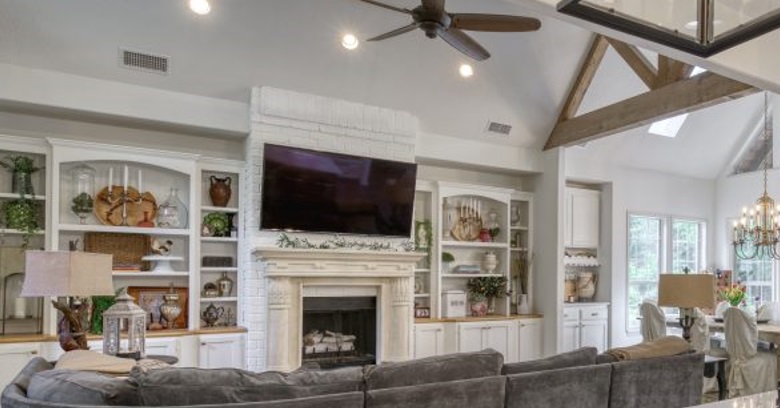
Trying to find General Contractors in Greater Bryan-College Station Area?
Good Company Construction manages the design, the trades, and the schedule on larger home projects across Greater Bryan-College Station Area families.
Reach out at 979-401-2527 to describe the project you are picturing.
Why Bigger Home Projects Need One Person in Charge
An owner who has decided to explore General Contractors in Greater Bryan-College Station Area quickly finds that the role is bigger than it sounds. The contractor of record carries responsibility for how everything fits together. That firm hires and schedules the specialists who do each part, and it stands behind how the finished work fits together.
The work is management as much as building, and it is what many owners are really paying attention to. Each trade needs real experience in its own area, though what matters most is the order and the quality of the handoffs. For General Contractors, Good Company Construction focuses on keeping every part of the project connected, and every phase is planned with the next one in mind.
Two Common Paths From Idea to Finished Home
On a design-build project, one team takes on the plans and the building together. Practical building knowledge goes into the drawings from the first sketch, and there is one place to go when a detail has to change.
The alternative is to hire an architect or designer first, and some owners find it more familiar. That produces a full set of plans that can be shared with different builders, which appeals to owners with a strong design in mind. Each approach fits some projects and not others, and a conversation about General Contractors in Greater Bryan-College Station Area can start from either one.
Additions Touch Every Part of the Building
An addition to an existing home connects to a structure that already has its own foundation, roofline, and systems. The new base and the old base need to behave as one in clay soil, and the roofline has to be tied in so water sheds properly. Extra square footage can overtax a system sized for the original rooms, and an HVAC specialist can usually answer it quickly.
Everything else in an addition rests on the frame, and it is the stage where accuracy counts most. A frame laid out accurately and checked against the plans save the finish carpenters from fighting crooked surfaces. Contractors who do this daily know, and the lesson is that time spent on the frame is time saved on the finish.
Siding, Rooflines, and Windows: Where New Meets Existing
An addition that is built well can still look out of place, when the roof pitch, siding, and window style were not carried through. Brick, siding, and trim age over time, so an exact match is sometimes hard to find, and the plan has to choose whether to match closely or to set the new section apart on purpose.
Rooflines are where an addition most often gives itself away, and it is a detail that experienced builders watch closely. Keeping the same slope and overhang makes the whole building read as one design, and it makes the rainwater path easier to manage.
Behind the Walls: Systems That Must Handle More
A house is sized as a system, and an addition changes the total, and the same thinking applies to every system in the house. In hot climates, undersized cooling is one of the first things owners notice after an addition, and a builder can have the equipment evaluated before the walls go up. Wiring and plumbing have capacity limits of their own, and a quick check can save a lot of rework.
Whole-Home Remodels: Planning the Entire House at Once
A full-house renovation turns on how rooms connect, not just how each one looks. Living in the home during construction is possible for some projects, and the contractor can stage the rooms to leave a kitchen or bathroom usable as long as possible.
Houses of a certain age may hold hidden conditions, and experienced builders plan for that. Past repairs, past additions, and past shortcuts are all common finds. Setting expectations before the walls are opened make a whole-home project easier on everyone.
The Approval Side of an Addition or Remodel
The more the work changes, the more likely it is that a permit is required. Rules differ between cities, counties, and rural parcels, and the builder in charge typically handles the application. An HOA can require approval of exterior changes before permits are even requested, and a builder familiar with the process can help.
Questions Worth Asking Before You Choose a Contractor
Choosing who will run a larger project is as much about communication as it is about construction. Ask which party deals with the city or county and the homeowners association, and ask how the trades are lined up and who supervises them on site.
Check that the credentials the local office expects are in place, and ask for the scope, the schedule, and any changes to them to be put in writing. A contractor with a steady process can generally explain how each one is handled.
Planning Phases So the Household Can Keep Functioning
Scheduling starts from the end date and works back through each phase, and everything else is arranged around it. Made-to-order items and engineered framing members have their own delivery timelines, so lead times are tracked from the first week.
If nobody moves out, staging becomes important. Temporary walls, protected floors, and a defined work zone help a family get through the weeks of construction. People who decide in advance how they will manage handle the weeks of construction with less stress.
Keeping Decisions Moving From Plan to Punch List
Owners of a bigger job make dozens of selections, and that part of the job is more demanding than it sounds. The visible selections that give a project its character all have to be settled early enough to be ordered and delivered on time. Contractors who list the choices and their due dates saves the owner from last-minute pressure.
The plans are the shared language of the whole project, and each trade works from the same pages. Every trade finds its own instructions in the set, from structural notes to finish details, so the clearer the plans, the smoother the build.
Closing Out an Addition or Remodel
At the end of a larger project, the owner and the contractor go through the space together. Any touch-ups are written down and completed before the job is closed, and the local building office completes its last check.
When General Contractors is the next step for your property in Greater Bryan-College Station Area, Good Company Construction is ready to discuss how the project would be organized from start to finish. Phone 979-401-2527 to explain what you are planning.