
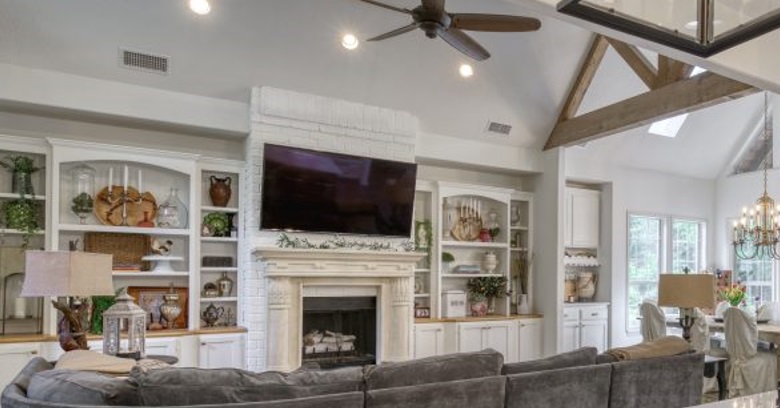
Looking for Home Remodeling Services in Greater Bryan-College Station Area?
Good Company Construction coordinates the people and the paperwork behind a home addition or remodel for Greater Bryan-College Station Area households.
Phone 979-401-2527 to see how your project could be organized.
Why Bigger Home Projects Need One Person in Charge
Anyone researching Home Remodeling Services in Greater Bryan-College Station Area learns that the work behind the title is mostly coordination. One firm takes charge of the entire scope and answers for it. It lines up the trades and the deliveries, and it spares the owner from refereeing between trades.
The role is quite different from performing one trade, and the difference shows in how a project runs. Framing, wiring, plumbing, and finishing each take skill, though what matters most is the order and the quality of the handoffs. Good Company Construction treats Home Remodeling Services as a coordination job first and a building job second, and every phase is planned with the next one in mind.
Choosing How the Design and the Building Are Organized
On a design-build project, the same firm handles both the design and the construction. Practical building knowledge goes into the drawings from the first sketch, and one party is responsible when something needs to be adjusted.
Another way to organize the work is design first, then bids from builders, and it has been used for many successful projects. The owner gets a complete set of drawings that any contractor can build from, which fits owners who want to settle the design before choosing who builds it. The right choice depends on the project and on the owner, and a builder can usually take on Home Remodeling Services whether the plans are ready or not.
What an Addition Changes About a House
A bump-out or added wing ties into foundation, framing, roof, and mechanical systems that were set years before. The new base and the old base need to behave as one in clay soil, and flashing and slope at the junction decide whether it stays dry. The air conditioner and ductwork may need to grow with the house, and the result affects comfort for years.
Framing is the quiet center of most additions, and it is the stage where accuracy counts most. Careful layout, accurate cuts, and checked measurements save the finish carpenters from fighting crooked surfaces. Ask anyone in the trades, and they will say that a poor frame is hard to hide.
Making an Addition Look Like It Was Always There
A new room that works inside the house may look foreign from the street, if nobody took the time to match the original lines. Brick, siding, and trim age over time, so an exact match is sometimes hard to find, and the owner should see the options before anything is ordered.
How the new roof meets the old one is what the eye catches, and it is worth planning before the framing starts. A roof that matches in slope and eave depth looks natural, and it keeps the roof shedding water in a predictable way.
What the Existing Systems Can and Cannot Carry
Every added room puts more demand on systems that were sized for the original house, and it is a point worth raising early. Long hot summers put the most strain on cooling, so capacity is worth checking early, and it is far simpler to size equipment on paper than to replace it later. The same is true of the breaker panel and the water lines, and the answer shapes the plan.
Whole-Home Remodels: Planning the Entire House at Once
A renovation that reaches most or all of a house turns on how rooms connect, not just how each one looks. Staying put is often possible for phased work and harder for a full gut, and the sequence of rooms is chosen with it in mind.
Previous owners may have changed things in ways that are not on any plan, and it is simply part of working on existing buildings. Past repairs, past additions, and past shortcuts are usually discovered during demolition. Telling the owner early that surprises are possible keep a large project from turning into a dispute.
Plans, Permits, and the Paperwork Behind a Larger Project
Once a project goes beyond cosmetic updates, the more likely it is that a permit is required. Local offices set their own list of what needs approval, and the paperwork usually runs through the builder. Homes in an association also answer to its design rules, and a builder familiar with the process can help.
How to Tell Whether a Contractor Is the Right Fit
Choosing who will run a larger project is as much about communication as it is about construction. Make sure it is clear who applies for permits and who schedules inspections, and ask how the trades are lined up and who supervises them on site.
Ask to see the paperwork the town requires, and get the list of what is included, and what is not, set out in plain words. Someone who has run many larger projects tends to have a system behind the answers.
Building the Calendar for an Addition or Whole-Home Project
Good schedules begin with the items that cannot be rushed, and the plan becomes a chain of dependencies. Items ordered to size often arrive long after standard stock does, so the buying schedule and the building schedule move together.
If the family lives in the home during construction, the contractor plans how to keep part of the house livable. Temporary walls, protected floors, and a defined work zone help a family get through the weeks of construction. People who decide in advance how they will manage are less surprised by what the job is like day to day.
The Owner Role in a Project That Runs on Time
Every addition or remodel involves a long list of choices, and the choices add up over a few weeks. Tile, lighting, paint colors, and plumbing fixtures all carry deadlines that are set by delivery times. A good builder who shares a decision calendar makes it easy to see what is coming.
The plans are the shared language of the whole project, and each trade works from the same pages. Each specialist pulls different information from the same sheets, from wall locations to fixture positions, so the clearer the plans, the smoother the build.
Finishing the Project and Handing It Over
As the work nears completion, a final look at every part of the work takes place with the owner. Loose ends are collected on a punch list and cleared, and the permit is finished once the inspector approves.
If your plans in Greater Bryan-College Station Area include Home Remodeling Services, Good Company Construction can start with a conversation about the scope, the plans, and the order of work. Get in touch at 979-401-2527 to describe the home you have in mind.