
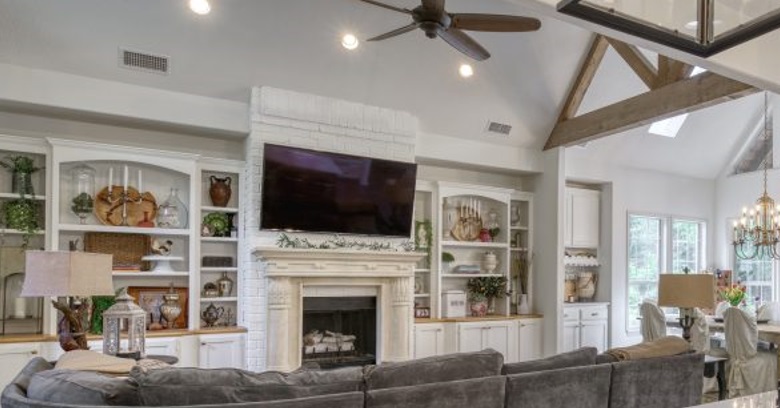
Searching for Home Renovations in College Station Texas?
Good Company Construction takes responsibility for the building side of a home project from layout to finish around College Station Texas property owners.
Reach out at 979-401-2527 to start a conversation about your plans.
What You Are Really Hiring When You Hire for a Larger Project
A homeowner who starts by searching for Home Renovations in College Station Texas finds that one name stands for many different tasks. The contractor of record carries responsibility for how everything fits together. That firm hires and schedules the specialists who do each part, and it spares the owner from refereeing between trades.
The role is quite different from performing one trade, and it is what many owners are really paying attention to. Carpentry, mechanical, and finish work are separate crafts, yet the project is won or lost on how smoothly the pieces connect. Good Company Construction organizes Home Renovations so one plan connects every trade, and every phase is planned with the next one in mind.
Who Draws the Plans, and Who Builds Them
When a project is delivered design-build, one team takes on the plans and the building together. Practical building knowledge goes into the drawings from the first sketch, and there is one place to go when a detail has to change.
A second route is to have the drawings made by one party and built by another, and it has been used for many successful projects. The drawings are finished before a builder is chosen, which works well for projects where the design is the centerpiece. Neither route is right for every project, and Home Renovations in College Station Texas can be planned either way.
Tying New Space Into an Existing Home
A bump-out or added wing must fit with everything already there. The new base and the old base need to behave as one in clay soil, and the roofline has to be tied in so water sheds properly. Cooling load rises with every added room, and a hot summer shows it, and the answer should come before the plans are final.
The frame carries the whole job, and it is the stage where accuracy counts most. Straight walls, a flat floor, and square window and door openings make every later trade's work easier. Ask anyone in the trades, and the point is that mistakes in the frame travel all the way to the paint.
Details That Decide Whether New Space Blends In
A new room that works inside the house may look foreign from the street, when the exterior details were chosen separately. Old siding and brick fade in the sun, which makes a perfect match difficult, and the owner should see the options before anything is ordered.
The roof is usually the first thing that shows a poor match, and it affects both looks and leaks. Matching the slope and the depth of the eaves is a simple way to make the addition look planned, and it keeps the roof shedding water in a predictable way.
What the Existing Systems Can and Cannot Carry
Every added room puts more demand on systems that were sized for the original house, and it is a point worth raising early. Long hot summers put the most strain on cooling, so capacity is worth checking early, and checking the load in advance prevents rework. Panels and pipes also have limits that an addition can reach, and the findings go into the scope of work.
Thinking Through a Project That Touches the Whole House
A renovation that reaches most or all of a house turns on how rooms connect, not just how each one looks. The question of where the family sleeps deserves an early answer, and the contractor can stage the rooms to leave a kitchen or bathroom usable as long as possible.
Previous owners may have changed things in ways that are not on any plan, and a candid conversation early helps. Outdated electrical panels, older supply lines, and walls that were opened and closed before are usually discovered during demolition. A flexible plan and an honest conversation about the unknowns keep the relationship between owner and builder on solid ground.
The Boring Part of the Job That Protects You
The larger the project, the more likely drawings have to be approved before work starts. What applies to a lot in town may not apply in the country, and the builder in charge typically handles the application. An HOA can require approval of exterior changes before permits are even requested, and it is wise to ask before anything is purchased.
What to Ask When You Compare Contractors
Picking a contractor for an addition or remodel is partly a question of paperwork and partly a question of fit. A sensible first question is who handles the approvals from the local office, and ask how the trades are lined up and who supervises them on site.
Check that the credentials the local office expects are in place, and expect the scope of work and the timeline to be written down clearly. A contractor with a steady process will often have a ready answer for every item.
Building the Calendar for an Addition or Whole-Home Project
Scheduling starts from the end date and works back through each phase, and the date for each phase follows from it. Specialty orders can run longer than any other part of the project, so the order of ordering matters as much as the order of building.
When the home remains occupied, the project is usually organized in phases. Clear boundaries between the work area and the living area keep daily life going while the building work continues. Families that plan the daily routine around the work usually get a smoother experience.
Owner Choices That Keep a Project on Schedule
The owner role is mostly deciding, and there is a lot to decide, and it helps to know the due dates in advance. Tile, lighting, paint colors, and plumbing fixtures all have to be settled early enough to be ordered and delivered on time. When the contractor provides a schedule of decisions turns a long list into a manageable one.
The plans are the shared language of the whole project, and they are the reference for every decision on site. The set tells the framer where the walls go and the finisher where the trim goes, so unclear plans lead to questions on site, repeated trips back to the drawings, and avoidable delays in the schedule.
Closing Out an Addition or Remodel
As the work nears completion, the owner and the contractor go through the space together. Small items that are off are noted and corrected, and the final inspection from the local office closes out the permit.
When Home Renovations is the next step for your property in College Station Texas, Good Company Construction can start with a conversation about the scope, the plans, and the order of work. Get in touch at 979-401-2527 to explain what you are planning.
Verified

Verified
Verified
Verified