
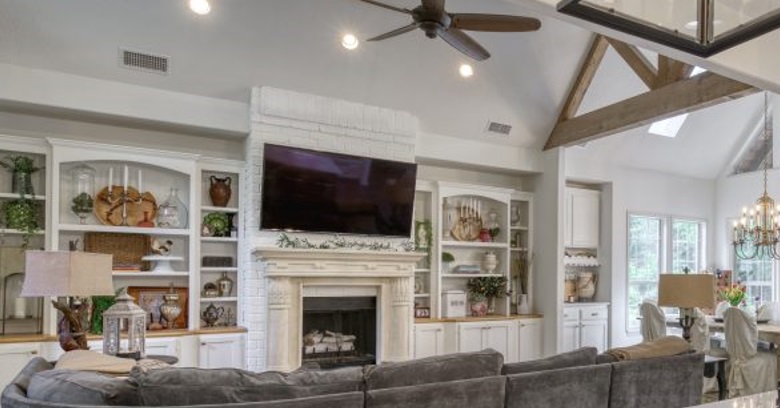
Thinking of hiring help with Whole Home Remodels in Brenham Texas?
Good Company Construction coordinates the people and the paperwork behind a home addition or remodel across Brenham Texas households.
Reach out at 979-401-2527 to see how your project could be organized.
A General Contractor Is the Hub of the Whole Project
An owner who has decided to explore Whole Home Remodels in Brenham Texas quickly finds that the role is bigger than it sounds. A single contractor is accountable for the project as a whole. It lines up the trades and the deliveries, and it spares the owner from refereeing between trades.
The work is management as much as building, and it calls for a different set of skills. The trades are specialties in their own right, but a good result depends mostly on timing and coordination. For Whole Home Remodels, Good Company Construction focuses on keeping every part of the project connected, and that focus is what holds a larger project together.
Who Draws the Plans, and Who Builds Them
If the project runs as design-build, one team takes on the plans and the building together. Practical building knowledge goes into the drawings from the first sketch, and decisions move faster because nobody is passing the plans back and forth.
A second route is to have the drawings made by one party and built by another, and it divides the work in a clear way. The drawings are finished before a builder is chosen, which makes sense when the architecture is the main goal. The right choice depends on the project and on the owner, and the choice rarely stops a project involving Whole Home Remodels from moving forward.
Additions Touch Every Part of the Building
A home addition ties into foundation, framing, roof, and mechanical systems that were set years before. Joining a new foundation to an old one needs careful planning in soil that shifts, and where the two roofs meet is a classic spot for leaks if it is rushed. The existing equipment may or may not be enough for the added space, and it is a conversation worth having early.
Everything else in an addition rests on the frame, and it is the stage where accuracy counts most. Plumb, level, and square framing set the stage for a clean finish. Contractors who do this daily know, and the lesson is that time spent on the frame is time saved on the finish.
Why the Outside of an Addition Deserves Planning Too
A new room that works inside the house may look foreign from the street, if nobody took the time to match the original lines. Old siding and brick fade in the sun, which makes a perfect match difficult, and the plan has to choose whether to match closely or to set the new section apart on purpose.
The roof is usually the first thing that shows a poor match, and it affects both looks and leaks. A roof that matches in slope and eave depth looks natural, and it avoids the kind of junction that leaks after a big storm.
What the Existing Systems Can and Cannot Carry
Existing equipment was matched to the original square footage, and that is easy to overlook on a drawing. In hot climates, undersized cooling is one of the first things owners notice after an addition, and it is much easier to run new ducts while the framing is open. Electrical service and water supply need to be checked for capacity too, and an upgrade is far easier before the walls are closed.
Thinking Through a Project That Touches the Whole House
Work that touches every room asks the owner to think about how every space works together. The question of where the family sleeps deserves an early answer, and the order of work is chosen to keep the household functioning.
Houses of a certain age may hold hidden conditions, and it is simply part of working on existing buildings. Past repairs, past additions, and past shortcuts should be treated as possibilities from the start. A schedule that leaves room for what turns up make a whole-home project easier on everyone.
Why Permits Matter More as the Work Gets Bigger
When a home project involves walls, additions, or systems, the more likely it is that a permit is required. Every jurisdiction in the state decides for itself what work needs a permit, and the general contractor is the one who deals with the office. Subdivision rules may add an extra step, and a builder familiar with the process can help.
Questions Worth Asking Before You Choose a Contractor
Selecting the firm that will take charge of the work is as much about communication as it is about construction. Ask who pulls the permits and who calls for the inspections, and ask which parts of the work are done by the contractor's own people and which go to subcontractors.
Ask to see the paperwork the town requires, and ask for the scope, the schedule, and any changes to them to be put in writing. A contractor with a steady process usually has a routine for each of them.
Planning Phases So the Household Can Keep Functioning
A schedule for a larger project is built backward from the items that take the longest, and the date for each phase follows from it. Some orders have to be placed before the permit is even issued, so the buying schedule and the building schedule move together.
If nobody moves out, work areas are separated from living areas. Clear boundaries between the work area and the living area keep daily life going while the building work continues. People who decide in advance how they will manage get through the work with fewer frustrations.
Why Early Decisions Make for a Smoother Build
Every addition or remodel involves a long list of choices, and it helps to know the due dates in advance. Tile, lighting, paint colors, and plumbing fixtures all carry deadlines that are set by delivery times. When the contractor provides a schedule of decisions keeps the project from stalling on a missing choice.
A well-prepared drawing package works as a tool as well as a requirement, and the quality of the set shows throughout the job. The set tells the framer where the walls go and the finisher where the trim goes, so the clearer the plans, the smoother the build.
Finishing the Project and Handing It Over
When the last trade has finished, each finished area gets checked one by one. Whatever is not right gets fixed before the project is called done, and the permit is finished once the inspector approves.
For Whole Home Remodels in Brenham Texas, Good Company Construction is ready to discuss how the project would be organized from start to finish. Reach us at 979-401-2527 to talk it over.
Verified

Verified
Verified
Verified