
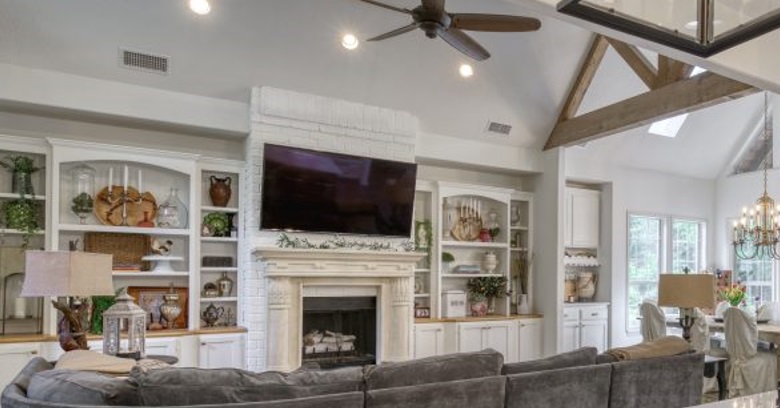
Trying to find Monopoly Framing Contractors in Caldwell Texas?
Good Company Construction acts as the general contractor on additions, remodels, and whole-home projects across Caldwell Texas property owners.
Call 979-401-2527 to see how your project could be organized.
The Role Behind the Name on the Truck
People who look into Monopoly Framing Contractors in Caldwell Texas learns that the work behind the title is mostly coordination. The contractor of record carries responsibility for how everything fits together. It lines up the trades and the deliveries, and it holds the overall plan so the owner does not have to.
The work is management as much as building, and it is the part owners tend to underestimate. Carpentry, mechanical, and finish work are separate crafts, yet the project is won or lost on how smoothly the pieces connect. Good Company Construction treats Monopoly Framing Contractors as a coordination job first and a building job second, and owners feel the difference in how few calls they have to make.
Two Common Paths From Idea to Finished Home
Under a design-build approach, design and construction sit under the same roof and the same contract. The advantage is that building questions get asked while the plans are still easy to change, and decisions move faster because nobody is passing the plans back and forth.
A second route is to have the drawings made by one party and built by another, and some owners find it more familiar. That produces a full set of plans that can be shared with different builders, which works well for projects where the design is the centerpiece. Neither path is better in every case, and a builder can usually take on Monopoly Framing Contractors whether the plans are ready or not.
What an Addition Changes About a House
New space added to a house connects to a structure that already has its own foundation, roofline, and systems. The new foundation has to work with the old one, and the roof has to meet the existing one without trapping water. Heating and cooling capacity also deserves a second look, and the answer should come before the plans are final.
Framing is where a straight, solid result begins, and it is the stage where accuracy counts most. Walls that are plumb, floors that are level, and openings that are square make every later trade's work easier. Contractors who do this daily know, and the lesson is that time spent on the frame is time saved on the finish.
Siding, Rooflines, and Windows: Where New Meets Existing
A structurally sound addition may stand out from the rest of the house, unless the details of the original home were studied first. After years of sun, an older exterior has a different tone than new material, and a good plan decides whether to match, blend, or deliberately contrast.
Rooflines are where an addition most often gives itself away, and it is easy to see from the street. Repeating the existing slope, overhang, and trim lines pulls the two parts together, and it limits the number of awkward valleys where leaves and water collect.
Behind the Walls: Systems That Must Handle More
Every added room puts more demand on systems that were sized for the original house, and that is easy to overlook on a drawing. Cooling capacity tends to be the system that shows a shortfall soonest, and checking the load in advance prevents rework. Panels and pipes also have limits that an addition can reach, and an upgrade is far easier before the walls are closed.
Renovating or Redesigning Across the Entire Home
A renovation that reaches most or all of a house needs a plan for how the house will be lived in during the work. Living in the home during construction is possible for some projects, and the schedule should reflect that choice from day one.
Previous owners may have changed things in ways that are not on any plan, and it is rarely a reason to avoid the work. Wiring from another era, plumbing that has been patched, and framing that has been altered are usually discovered during demolition. Telling the owner early that surprises are possible can be a sign of a contractor who has done this before.
Drawings and Approvals Before Anything Is Built
As soon as a job alters structure, adds space, or moves systems, the more important it is to learn what the town requires. Rules differ between cities, counties, and rural parcels, and the general contractor is the one who deals with the office. Subdivision rules may add an extra step, and it is wise to ask before anything is purchased.
A Short List of Things to Settle Before Signing Anything
Hiring for a project that touches structure and systems is partly a question of paperwork and partly a question of fit. Find out who is responsible for permits, inspections, and the final sign-off, and ask who will be on the job day to day and who the owner can reach.
It is reasonable to ask for whatever the city or county requires to be shown, and ask for the scope, the schedule, and any changes to them to be put in writing. A contractor with a steady process can generally explain how each one is handled.
Why Staging Matters When the House Stays Occupied
The calendar for an addition starts with whatever has the longest lead time, and everything else is arranged around it. Items ordered to size often arrive long after standard stock does, so the sequence of purchases is planned alongside the sequence of work.
When the home remains occupied, work areas are separated from living areas. Sealed doorways, covered flooring, and a separate entrance for the trades help a family get through the weeks of construction. Households that think it through before the work starts handle the weeks of construction with less stress.
Why Early Decisions Make for a Smoother Build
There are many selections to make before and during a job, and it helps to know the due dates in advance. Doors, trim profiles, cabinet hardware, and surfaces have decision dates that work backward from the schedule. Contractors who list the choices and their due dates keeps the project from stalling on a missing choice.
A well-prepared drawing package works as a tool as well as a requirement, and each trade works from the same pages. Layouts, dimensions, and notes on the pages guide each trade through its part, so the clearer the plans, the smoother the build.
Closing Out an Addition or Remodel
When the last trade has finished, a final look at every part of the work takes place with the owner. Anything that needs attention goes on a short list and gets handled, and the local building office completes its last check.
For anyone in Caldwell Texas with a project involving Monopoly Framing Contractors, Good Company Construction welcomes a first conversation about what you have in mind. Dial 979-401-2527 to get the conversation started.
Verified

Verified
Verified
Verified