
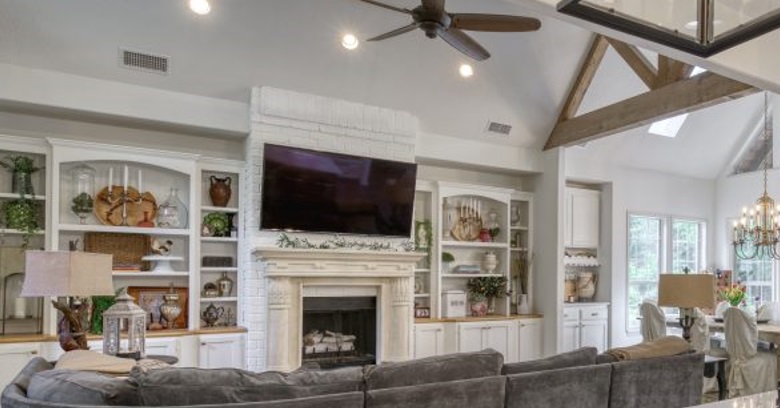
Looking for Home Renovations in Caldwell Texas?
Good Company Construction takes responsibility for the building side of a home project from layout to finish on Caldwell Texas property owners.
Ring 979-401-2527 to ask how a project like yours would be run.
Why Bigger Home Projects Need One Person in Charge
A homeowner who starts by searching for Home Renovations in Caldwell Texas quickly finds that the role is bigger than it sounds. The contractor of record carries responsibility for how everything fits together. It sequences the subcontractors so they do not collide, and it stands behind how the finished work fits together.
It is more about managing work than doing one kind of it, and it calls for a different set of skills. Framing, wiring, plumbing, and finishing each take skill, but a good result depends mostly on timing and coordination. Good Company Construction treats Home Renovations as a coordination job first and a building job second, and every phase is planned with the next one in mind.
Two Common Paths From Idea to Finished Home
With a design-build arrangement, a single contract covers the drawings and the work. Practical building knowledge goes into the drawings from the first sketch, and there is one place to go when a detail has to change.
The alternative is to hire an architect or designer first, and it has been used for many successful projects. The design stands on its own as a finished package, which works well for projects where the design is the centerpiece. Neither route is right for every project, and a builder can usually take on Home Renovations whether the plans are ready or not.
Why a Room Addition Is More Than a New Room
New space added to a house connects to a structure that already has its own foundation, roofline, and systems. Two foundations of different ages move differently, and the connection has to allow for that, and the roof junction is where careful detailing pays off. The air conditioner and ductwork may need to grow with the house, and the equipment should be sized by calculation rather than guesswork.
The frame carries the whole job, and it is worth watching closely. Careful layout, accurate cuts, and checked measurements pay off later when cabinets and trim go in. Framers and finish carpenters agree, and they will say that a poor frame is hard to hide.
Siding, Rooflines, and Windows: Where New Meets Existing
A new room that works inside the house may look foreign from the street, if nobody took the time to match the original lines. Brick, siding, and trim age over time, so an exact match is sometimes hard to find, and the plan has to choose whether to match closely or to set the new section apart on purpose.
The roof is usually the first thing that shows a poor match, and it affects both looks and leaks. Carrying the original pitch and overhang through to the new section keeps the house balanced, and it avoids the kind of junction that leaks after a big storm.
Behind the Walls: Systems That Must Handle More
New space means more load on the equipment that was installed for less, and it adds up faster than most owners expect. Long hot summers put the most strain on cooling, so capacity is worth checking early, and checking the load in advance prevents rework. Panels and pipes also have limits that an addition can reach, and it is part of every careful addition plan.
Thinking Through a Project That Touches the Whole House
A full-house renovation asks the owner to think about how every space works together. Some owners stay in the house during the work, and others move out, and the contractor can stage the rooms to leave a kitchen or bathroom usable as long as possible.
Previous owners may have changed things in ways that are not on any plan, and it is rarely a reason to avoid the work. Wiring from another era, plumbing that has been patched, and framing that has been altered are usually discovered during demolition. Planning for the unexpected rather than hoping it will not happen can be a sign of a contractor who has done this before.
Drawings and Approvals Before Anything Is Built
The more the work changes, the more likely drawings have to be approved before work starts. Every jurisdiction in the state decides for itself what work needs a permit, and the person responsible for the job usually applies. Subdivision rules may add an extra step, and that approval can take a while.
Questions Worth Asking Before You Choose a Contractor
Deciding who should manage a home project has a business side and a personal side. Make sure it is clear who applies for permits and who schedules inspections, and find out who will be the point of contact when a question comes up.
A careful owner confirms that the documents the jurisdiction asks for are in order, and expect the scope of work and the timeline to be written down clearly. A contractor who answers these questions easily tends to have a system behind the answers.
Why Staging Matters When the House Stays Occupied
A schedule for a larger project is built backward from the items that take the longest, and everything else is arranged around it. Specialty orders can run longer than any other part of the project, so lead times are tracked from the first week.
When the household stays in the house, the staging plan matters more. Dust barriers, a path for workers, and a clear plan for the kitchen and bathrooms turn a disruptive project into a manageable one. Families that plan the daily routine around the work tend to find a larger project far easier to live with.
Selections and Approvals: What the Owner Decides, and When
There are many selections to make before and during a job, and the choices add up over a few weeks. Surface materials, fixtures, and the details that make a room feel finished must be decided ahead of the day they are needed. Contractors who list the choices and their due dates keeps the project from stalling on a missing choice.
The plans are the shared language of the whole project, and the quality of the set shows throughout the job. Each specialist pulls different information from the same sheets, from wall locations to fixture positions, so unclear plans lead to questions on site, repeated trips back to the drawings, and avoidable delays in the schedule.
Finishing the Project and Handing It Over
Once construction is done, the owner and the contractor go through the space together. Small items that are off are noted and corrected, and the paperwork is closed once the final inspection is passed.
When Home Renovations is the next step for your property in Caldwell Texas, Good Company Construction welcomes a first conversation about what you have in mind. Reach us at 979-401-2527 to describe the home you have in mind.
Verified

Verified
Verified
Verified