
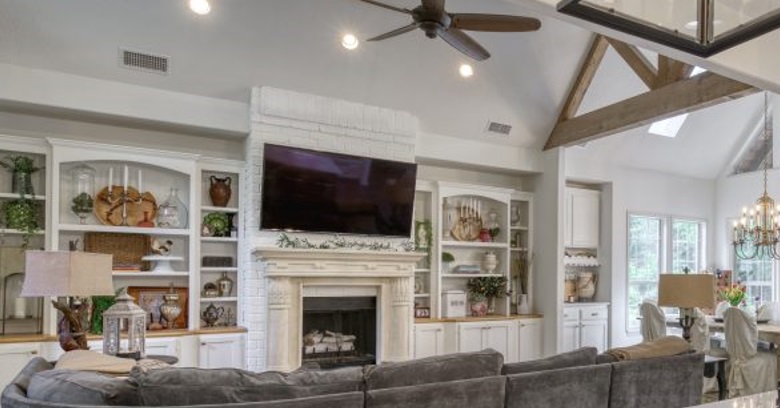
Looking for General Contractors in Brenham Texas?
Good Company Construction coordinates the people and the paperwork behind a home addition or remodel on Brenham Texas households.
Call 979-401-2527 to describe the project you are picturing.
What a General Contractor Actually Does
An owner who has decided to explore General Contractors in Brenham Texas learns that the work behind the title is mostly coordination. The contractor of record carries responsibility for how everything fits together. It lines up the trades and the deliveries, and it answers for the result.
The work is management as much as building, and it is the part owners tend to underestimate. Each trade needs real experience in its own area, though what matters most is the order and the quality of the handoffs. Good Company Construction organizes General Contractors so one plan connects every trade, and every phase is planned with the next one in mind.
Who Draws the Plans, and Who Builds Them
On a design-build project, the same firm handles both the design and the construction. Problems of structure, access, and sequence surface during design, not after it, and the owner deals with one point of contact.
Some owners prefer to have the plans drawn independently, and it divides the work in a clear way. The plans become a document that several contractors can study, which appeals to owners with a strong design in mind. Each approach fits some projects and not others, and the choice rarely stops a project involving General Contractors from moving forward.
Why a Room Addition Is More Than a New Room
A bump-out or added wing connects to a structure that already has its own foundation, roofline, and systems. Joining a new foundation to an old one needs careful planning in soil that shifts, and the roofline has to be tied in so water sheds properly. Heating and cooling capacity also deserves a second look, and an HVAC specialist can usually answer it quickly.
Everything else in an addition rests on the frame, and it hides behind drywall once the job is done. Walls that are plumb, floors that are level, and openings that are square make trim, cabinets, and doors fit without fuss. Anyone who has worked on a job site will say, and they will say that a poor frame is hard to hide.
Siding, Rooflines, and Windows: Where New Meets Existing
Good construction does not always mean a good match, unless the details of the original home were studied first. After years of sun, an older exterior has a different tone than new material, and the plan has to choose whether to match closely or to set the new section apart on purpose.
The roof is usually the first thing that shows a poor match, and it is worth planning before the framing starts. Repeating the existing slope, overhang, and trim lines pulls the two parts together, and it keeps the roof shedding water in a predictable way.
Mechanical Systems Have to Grow With the House
Existing equipment was matched to the original square footage, and it adds up faster than most owners expect. Heat is the pressing issue across the state, so the air conditioning side deserves attention first, and checking the load in advance prevents rework. The electrical panel and the plumbing supply deserve the same question, and the findings go into the scope of work.
When the Scope Is Every Room
Work that touches every room needs a plan for how the house will be lived in during the work. Staying put is often possible for phased work and harder for a full gut, and the schedule should reflect that choice from day one.
A house that has been in the neighborhood a long time often has a history behind its walls, and it is easiest to handle with a flexible plan. Hidden fixes that nobody documented are usually discovered during demolition. Setting expectations before the walls are opened keep the relationship between owner and builder on solid ground.
The Approval Side of an Addition or Remodel
The larger the project, the more important it is to learn what the town requires. Local offices set their own list of what needs approval, and the builder in charge typically handles the application. Associations often want to see plans for exterior work first, and skipping the step can force changes later.
Questions Worth Asking Before You Choose a Contractor
Picking a contractor for an addition or remodel is partly a question of paperwork and partly a question of fit. A sensible first question is who handles the approvals from the local office, and ask how the trades are lined up and who supervises them on site.
Ask to see the paperwork the town requires, and expect the scope of work and the timeline to be written down clearly. A contractor who answers these questions easily usually has a routine for each of them.
Planning Phases So the Household Can Keep Functioning
Good schedules begin with the items that cannot be rushed, and the longest wait sets the pace for the rest. Specialty orders can run longer than any other part of the project, so the sequence of purchases is planned alongside the sequence of work.
For projects with the owners at home, the contractor plans how to keep part of the house livable. Sealed doorways, covered flooring, and a separate entrance for the trades reduce the strain on a household living beside a job site. Households that think it through before the work starts handle the weeks of construction with less stress.
Owner Choices That Keep a Project on Schedule
A larger project asks the owner to choose many things, and the choices add up over a few weeks. Doors, trim profiles, cabinet hardware, and surfaces have decision dates that work backward from the schedule. Contractors who list the choices and their due dates makes it easy to see what is coming.
A well-prepared drawing package works as a tool as well as a requirement, and gaps in the plans come back as questions. Each specialist pulls different information from the same sheets, from wall locations to fixture positions, so a set that leaves gaps tends to produce mistakes in the field.
Finishing the Project and Handing It Over
Once construction is done, a final look at every part of the work takes place with the owner. Any touch-ups are written down and completed before the job is closed, and the local building office completes its last check.
For homeowners ready to move ahead with General Contractors around Brenham Texas, Good Company Construction is a good place to begin a conversation about your plans. Reach us at 979-401-2527 to begin sorting out the first steps.
Verified

Verified
Verified
Verified