
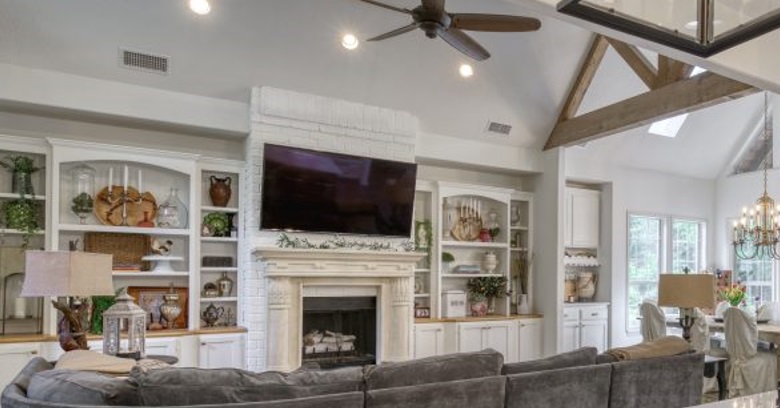
Trying to find Home Remodel Companies in Brenham Texas?
Good Company Construction manages the design, the trades, and the schedule on larger home projects within Brenham Texas homeowners.
Dial 979-401-2527 to start a conversation about your plans.
What a General Contractor Actually Does
An owner who has decided to explore Home Remodel Companies in Brenham Texas learns that the work behind the title is mostly coordination. A single contractor is accountable for the project as a whole. It sequences the subcontractors so they do not collide, and it answers for the result.
It is more about managing work than doing one kind of it, and it is the part owners tend to underestimate. Every trade has its own tools, methods, and rules, and the success of the job rests on the handoffs between them. For Home Remodel Companies, Good Company Construction focuses on keeping every part of the project connected, and the schedule shows it from the first week.
One Team or Two? How Project Delivery Is Set Up
With a design-build arrangement, a single contract covers the drawings and the work. Problems of structure, access, and sequence surface during design, not after it, and one party is responsible when something needs to be adjusted.
Another way to organize the work is design first, then bids from builders, and it works well when plans are already in hand. That produces a full set of plans that can be shared with different builders, which suits owners who want an independent designer with a particular vision. It comes down to what the owner values most, and a builder can usually take on Home Remodel Companies whether the plans are ready or not.
What an Addition Changes About a House
A room addition ties into foundation, framing, roof, and mechanical systems that were set years before. The new base and the old base need to behave as one in clay soil, and the roof has to meet the existing one without trapping water. Cooling load rises with every added room, and a hot summer shows it, and the equipment should be sized by calculation rather than guesswork.
Framing is the quiet center of most additions, and it hides behind drywall once the job is done. Plumb, level, and square framing make trim, cabinets, and doors fit without fuss. Contractors who do this daily know, and they will say that rushed framing shows up as problems in every phase afterward.
Siding, Rooflines, and Windows: Where New Meets Existing
Good construction does not always mean a good match, if nobody took the time to match the original lines. After years of sun, an older exterior has a different tone than new material, and the plan has to choose whether to match closely or to set the new section apart on purpose.
How the new roof meets the old one is what the eye catches, and it affects both looks and leaks. Repeating the existing slope, overhang, and trim lines pulls the two parts together, and it avoids the kind of junction that leaks after a big storm.
Mechanical Systems Have to Grow With the House
A house is sized as a system, and an addition changes the total, and it adds up faster than most owners expect. Heat is the pressing issue across the state, so the air conditioning side deserves attention first, and it is usually easier to plan for that during design than to correct it afterward. The electrical panel and the plumbing supply deserve the same question, and an upgrade is far easier before the walls are closed.
Thinking Through a Project That Touches the Whole House
A project that reshapes the whole house asks the owner to think about how every space works together. Some owners stay in the house during the work, and others move out, and the plan is shaped accordingly.
Previous owners may have changed things in ways that are not on any plan, and it is easiest to handle with a flexible plan. Hidden fixes that nobody documented are all common finds. A schedule that leaves room for what turns up make a whole-home project easier on everyone.
Why Permits Matter More as the Work Gets Bigger
As soon as a job alters structure, adds space, or moves systems, the more likely drawings have to be approved before work starts. What applies to a lot in town may not apply in the country, and the builder in charge typically handles the application. An HOA can require approval of exterior changes before permits are even requested, and the rules are usually easy to obtain from the association.
The Conversation to Have Before the Work Begins
Selecting the firm that will take charge of the work is as much about communication as it is about construction. Ask who pulls the permits and who calls for the inspections, and ask who will be on the job day to day and who the owner can reach.
Check that the credentials the local office expects are in place, and ask for the scope, the schedule, and any changes to them to be put in writing. Firms that organize their work well usually has a routine for each of them.
Planning Phases So the Household Can Keep Functioning
A schedule for a larger project is built backward from the items that take the longest, and the date for each phase follows from it. Some orders have to be placed before the permit is even issued, so lead times are tracked from the first week.
If the family lives in the home during construction, staging becomes important. Temporary walls, protected floors, and a defined work zone turn a disruptive project into a manageable one. People who talk it over with the builder first handle the weeks of construction with less stress.
The Owner Role in a Project That Runs on Time
The owner role is mostly deciding, and there is a lot to decide, and it helps to know the due dates in advance. Flooring, fixtures, finishes, windows, and hardware all need to be chosen with enough lead time to arrive when the trades need them. When the contractor provides a schedule of decisions turns a long list into a manageable one.
A well-prepared drawing package works as a tool as well as a requirement, and each trade works from the same pages. Every trade finds its own instructions in the set, from structural notes to finish details, so the clearer the plans, the smoother the build.
The Last Phase of a Contractor's Job
As the work nears completion, the owner and the contractor go through the space together. Anything that needs attention goes on a short list and gets handled, and the town's final inspection signs off on the building work.
For Home Remodel Companies in Brenham Texas, Good Company Construction welcomes a first conversation about what you have in mind. Reach us at 979-401-2527 to talk it over.
Verified

Verified
Verified
Verified