
Need Church Reno Services in College Station Texas?
Good Company Construction reworks existing commercial buildings with the schedule, the access, and the code questions in mind around College Station Texas congregations.
Ring 979-401-2527 to start with how your business uses the space today.
Before Anything Is Torn Out, Understand the Operation
Decision makers who begin with Church Reno Services in College Station Texas usually find the operation matters as much as the construction. A clinic cannot lose its waiting room for a month, a showroom cannot hide its displays, and a school wing cannot lose its classrooms mid-term, and the schedule is only realistic if it respects them.
On Church Reno Services , Good Company Construction asks what has to stay open, what can close, and how much time is available, because the answers decide the sequence of the whole job.
Working in an Occupied Building: Phasing and Access
When a building has to stay in use, the project is broken into sections that can be sealed off. Temporary walls, dust barriers, and protected walkways keep the public away from the work, and a separate entrance for workers and materials keeps the front door clear.
Certain tasks are ideally done after closing. Tasks with dust, fumes, or utility shutoffs are usually pushed to nights, weekends, or planned closures.
What Changes in the Rules When a Building Serves the Public
Offices, shops, and gathering spaces answer to codes that cover ramps, restrooms, door widths, alarms, and exit paths. The scope of the work often decides how much of the building has to be looked at again, so those questions belong in the first meeting and not the last.
Occupancy type matters too. Meeting halls, clinics, classroom wings, and warehouse showrooms do not all carry the same requirements. Plan-check practices vary from one jurisdiction to another, which makes it wise to confirm the local process before design is finished.
Planning Utilities Before Drawing the New Layout
Moving walls and equipment shifts the demands on the building systems. Modern equipment and a fuller floor can strain a panel that was installed long ago, so upgrades can be planned instead of improvised. Phone, network, and security wiring are easiest to run while walls are open.
Opening the Walls: Surprises and How They Are Handled
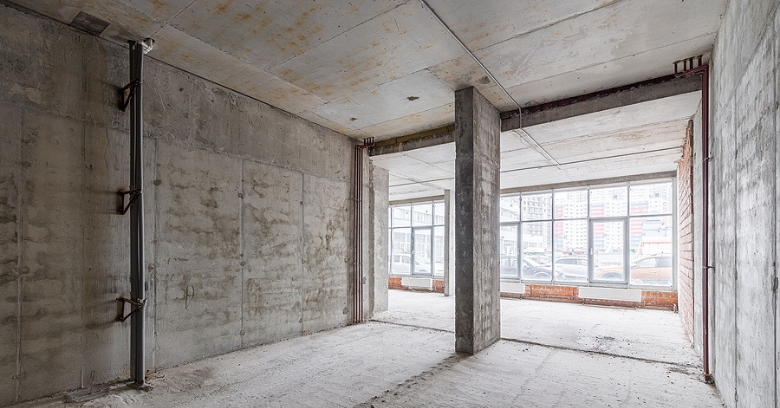
A building that has served several tenants or decades of use can hide old repairs, abandoned lines, and altered framing. Structural members cut for earlier equipment, and slabs with sleeves nobody remembers should be anticipated in the schedule and discussed with the owner in advance.
If testing suggests that something needs special handling, the first priority is a proper assessment, not guesswork. Rules for handling and disposal come from state and federal authorities, and the owner should hear about it before the work, not during it.
Choosing Finishes for a Space That Gets Heavy Use
High-traffic buildings put real demands on every finish. Materials chosen for how they age under daily use are often the difference between a space that ages well and one that looks tired quickly.
Acoustics and lighting do a lot of the work in a finished space. Where a space needs quiet, walls and ceilings are built to keep sound in its place, and the lighting layout is easiest to settle before the ceiling is closed.
Planning for Seating, Sound, and Sightlines
Any space designed to hold a gathering has to do several things at once. The number of people the room holds, how they move, and how quickly they can leave have to be considered together when the room is changed. Large-span ceilings and tall walls add their own construction questions, so the schedule has to include those added steps.
First Impressions Are Part of the Project
For a business that depends on walk-in traffic, the street-facing side carries a lot of weight. Parking surfaces, walkways, landscaping edges, and the entrance doors work together as a single design. Finishes exposed to strong UV and heavy rain depends on careful flashing, sealants, and coatings.
Beyond the Interior: Roofs, Pavement, and Drainage
A typical commercial roof is built to hold water back and then shed it slowly, so the details around drains, edges, and equipment decide whether it stays dry. Intense heat expands and contracts the roof surface every day, and the seams take the strain, and it is better to find a leak path before the new ceiling goes up.
Site surfaces and grading often get overlooked. Uneven walkways, worn striping, and drainage that has silted up can create safety and access problems that a remodel is a good chance to correct.
Communication During a Project in a Working Building
People handle disruption well when they know when, where, and how long. Written notices, clear signs, and a calendar of upcoming phases helps everyone plan around the work. A named contact for the owner and a named contact for the builder can make it easy to resolve problems the day they appear.
Timing a Commercial Project Around the Calendar
Every kind of building has a busy season and a quiet one. Events, deadlines, and inspections all place dates on the calendar that cannot move, and a good contractor builds the schedule backward from those dates. Exterior work depends on the weather as well, so a little extra time is built in for the days that cannot be worked.
Owners, Tenants, and Approvals
Different people hold different pieces of the approval. Lease terms can limit the work or require specific approvals, and an organization may need several meetings before a plan is settled. Sorting out who approves what at the start keeps the schedule realistic.
Before the doors reopen, a commercial space is checked from end to end. The systems that protect people in an emergency are checked before anyone is allowed back in, and that final stage is where a well-run project shows its quality.
The Last Steps Before the Doors Reopen
As the last trade leaves, the final inspection from the local authority confirms the work meets code. Everyone responsible for the space goes over the finished work together, and a punch list is cleared before the job is considered done.
For Church Reno Services in College Station Texas, Good Company Construction can begin with a conversation about the operation, the building, and the timeline. Dial 979-401-2527 to share what the space needs to do.
Verified

Verified
Verified
Verified
Verified