
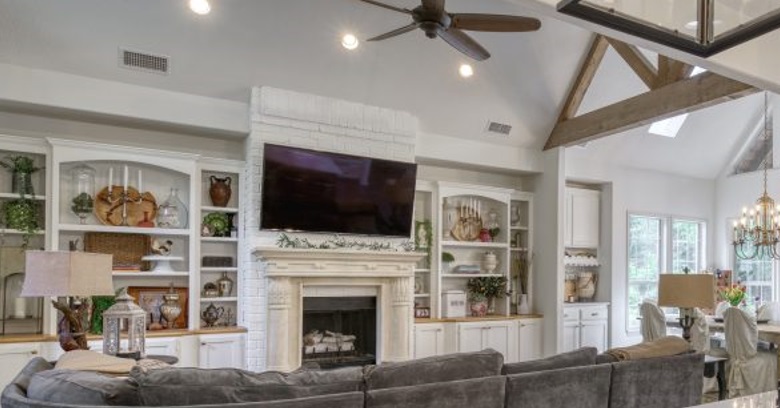
Looking for General Contractors in College Station Texas?
Good Company Construction acts as the general contractor on additions, remodels, and whole-home projects across College Station Texas households.
Ring 979-401-2527 to talk through what you want built or changed.
The Role Behind the Name on the Truck
An owner who has decided to explore General Contractors in College Station Texas discovers that the job description is wider than most expect. One firm takes charge of the entire scope and answers for it. The same contractor brings in the framers, electricians, plumbers, and finishers at the right times, and it spares the owner from refereeing between trades.
It sits above the individual trades rather than beside them, and the difference shows in how a project runs. Carpentry, mechanical, and finish work are separate crafts, yet the project is won or lost on how smoothly the pieces connect. Good Company Construction builds its approach to General Contractors around that coordination, and the plan stays in one place where every trade can see it.
Design-Build or Separate Designer and Builder: Two Ways to Organize a Project
With a design-build arrangement, design and construction sit under the same roof and the same contract. That lets practical questions about structure and sequence shape the design early, and there is one place to go when a detail has to change.
Some owners prefer to have the plans drawn independently, and it works well when plans are already in hand. That produces a full set of plans that can be shared with different builders, which appeals to owners with a strong design in mind. Each approach fits some projects and not others, and General Contractors in College Station Texas can be planned either way.
Why a Room Addition Is More Than a New Room
An addition to an existing home is not a freestanding building. The new foundation has to work with the old one, and where the two roofs meet is a classic spot for leaks if it is rushed. The air conditioner and ductwork may need to grow with the house, and the answer should come before the plans are final.
Good framing is what makes the rest of an addition go right, and it is worth watching closely. Plumb, level, and square framing make trim, cabinets, and doors fit without fuss. Experienced carpenters will tell you, and they will say that a poor frame is hard to hide.
Making an Addition Look Like It Was Always There
Quality work can still look like an afterthought, unless the details of the original home were studied first. After years of sun, an older exterior has a different tone than new material, and a thoughtful builder talks through those options with the owner.
Rooflines are where an addition most often gives itself away, and it is a detail that experienced builders watch closely. Repeating the existing slope, overhang, and trim lines pulls the two parts together, and it avoids the kind of junction that leaks after a big storm.
What the Existing Systems Can and Cannot Carry
Existing equipment was matched to the original square footage, and it adds up faster than most owners expect. Long hot summers put the most strain on cooling, so capacity is worth checking early, and it is usually easier to plan for that during design than to correct it afterward. Wiring and plumbing have capacity limits of their own, and an upgrade is far easier before the walls are closed.
Bigger Scope, Bigger Planning Needs
A renovation that reaches most or all of a house raises questions that single-room projects never face. The question of where the family sleeps deserves an early answer, and the schedule should reflect that choice from day one.
Houses of a certain age may hold hidden conditions, and a candid conversation early helps. Wiring from another era, plumbing that has been patched, and framing that has been altered turn up often once the surface comes off. A flexible plan and an honest conversation about the unknowns help the whole job go more smoothly.
Drawings and Approvals Before Anything Is Built
Once a project goes beyond cosmetic updates, the more likely drawings have to be approved before work starts. The requirements in a city are not the same as in an unincorporated area, and the contractor of record normally takes care of pulling them. Neighborhood rules on color, height, and materials can shape what is allowed, and a builder familiar with the process can help.
The Conversation to Have Before the Work Begins
Deciding who should manage a home project is partly a question of paperwork and partly a question of fit. Make sure it is clear who applies for permits and who schedules inspections, and ask how the trades are lined up and who supervises them on site.
Check that the credentials the local office expects are in place, and ask for the scope, the schedule, and any changes to them to be put in writing. Firms that organize their work well tends to have a system behind the answers.
Building the Calendar for an Addition or Whole-Home Project
The calendar for an addition starts with whatever has the longest lead time, and the plan becomes a chain of dependencies. Made-to-order items and engineered framing members have their own delivery timelines, so the order of ordering matters as much as the order of building.
When the household stays in the house, the project is usually organized in phases. A plan for water, power, and a working bathroom throughout make it practical to stay home while work goes on. People who talk it over with the builder first get through the work with fewer frustrations.
Keeping Decisions Moving From Plan to Punch List
A larger project asks the owner to choose many things, and most owners enjoy it more when it is organized. Doors, trim profiles, cabinet hardware, and surfaces all have to be settled early enough to be ordered and delivered on time. A good builder who shares a decision calendar makes it easy to see what is coming.
Drawings are what every trade reads before it starts, and they are the reference for every decision on site. Each specialist pulls different information from the same sheets, from wall locations to fixture positions, so unclear plans lead to questions on site, repeated trips back to the drawings, and avoidable delays in the schedule.
How a Larger Project Comes to a Close
When the building work wraps up, a final look at every part of the work takes place with the owner. Small items that are off are noted and corrected, and the town's final inspection signs off on the building work.
For anyone in College Station Texas with a project involving General Contractors, Good Company Construction is a good place to begin a conversation about your plans. Get in touch at 979-401-2527 to describe the home you have in mind.
Verified

Verified
Verified
Verified