
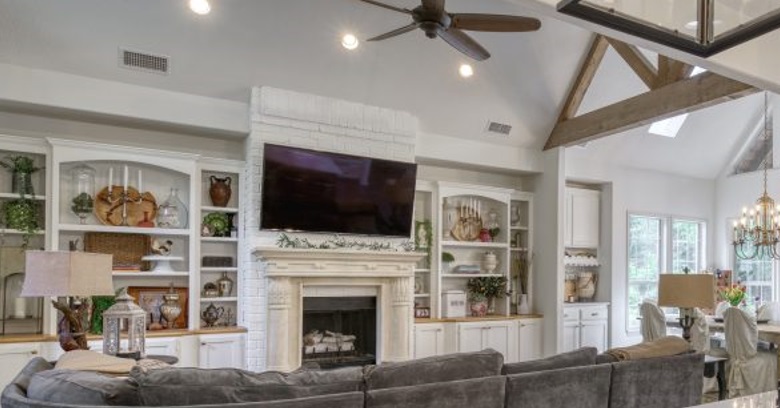
Thinking of hiring help with Home Addition Contractors in College Station Texas?
Good Company Construction acts as the general contractor on additions, remodels, and whole-home projects on College Station Texas property owners.
Call 979-401-2527 to see how your project could be organized.
What You Are Really Hiring When You Hire for a Larger Project
People who look into Home Addition Contractors in College Station Texas discovers that the job description is wider than most expect. One firm takes charge of the entire scope and answers for it. It sequences the subcontractors so they do not collide, and it answers for the result.
It sits above the individual trades rather than beside them, and it is the part owners tend to underestimate. Carpentry, mechanical, and finish work are separate crafts, yet the project is won or lost on how smoothly the pieces connect. Good Company Construction organizes Home Addition Contractors so one plan connects every trade, and owners feel the difference in how few calls they have to make.
Choosing How the Design and the Building Are Organized
With a design-build arrangement, the designer and the builder work as one group from the start. The advantage is that building questions get asked while the plans are still easy to change, and there is one place to go when a detail has to change.
The alternative is to hire an architect or designer first, and it gives the owner two points of view. The plans become a document that several contractors can study, which fits owners who want to settle the design before choosing who builds it. The right choice depends on the project and on the owner, and a builder can usually take on Home Addition Contractors whether the plans are ready or not.
Additions Touch Every Part of the Building
New space added to a house is not a freestanding building. The new base and the old base need to behave as one in clay soil, and flashing and slope at the junction decide whether it stays dry. The air conditioner and ductwork may need to grow with the house, and it is a conversation worth having early.
Good framing is what makes the rest of an addition go right, and it is worth watching closely. Walls that are plumb, floors that are level, and openings that are square save the finish carpenters from fighting crooked surfaces. Experienced carpenters will tell you, and the point is that mistakes in the frame travel all the way to the paint.
Details That Decide Whether New Space Blends In
An addition that is built well can still look out of place, unless the details of the original home were studied first. After years of sun, an older exterior has a different tone than new material, and the owner should see the options before anything is ordered.
How the new roof meets the old one is what the eye catches, and it is a detail that experienced builders watch closely. Matching the slope and the depth of the eaves is a simple way to make the addition look planned, and it limits the number of awkward valleys where leaves and water collect.
Heating, Cooling, Electrical, and Plumbing Need a Second Look
New space means more load on the equipment that was installed for less, and it adds up faster than most owners expect. Heat is the pressing issue across the state, so the air conditioning side deserves attention first, and it is much easier to run new ducts while the framing is open. Wiring and plumbing have capacity limits of their own, and it is part of every careful addition plan.
Whole-Home Remodels: Planning the Entire House at Once
Work that touches every room turns on how rooms connect, not just how each one looks. Living in the home during construction is possible for some projects, and the schedule should reflect that choice from day one.
The older the house, the more likely something unexpected waits behind a wall, and experienced builders plan for that. Past repairs, past additions, and past shortcuts are all common finds. Planning for the unexpected rather than hoping it will not happen help the whole job go more smoothly.
The Approval Side of an Addition or Remodel
When a home project involves walls, additions, or systems, the more important it is to learn what the town requires. The requirements in a city are not the same as in an unincorporated area, and the paperwork usually runs through the builder. Neighborhood rules on color, height, and materials can shape what is allowed, and skipping the step can force changes later.
A Short List of Things to Settle Before Signing Anything
Choosing who will run a larger project is as much about communication as it is about construction. Ask which party deals with the city or county and the homeowners association, and ask who will be on the job day to day and who the owner can reach.
Ask to see the paperwork the town requires, and expect the scope of work and the timeline to be written down clearly. Someone who has run many larger projects can generally explain how each one is handled.
Building the Calendar for an Addition or Whole-Home Project
Good schedules begin with the items that cannot be rushed, and that is why ordering starts early. Made-to-order items and engineered framing members have their own delivery timelines, so the sequence of purchases is planned alongside the sequence of work.
For projects with the owners at home, the project is usually organized in phases. Sealed doorways, covered flooring, and a separate entrance for the trades reduce the strain on a household living beside a job site. People who decide in advance how they will manage are less surprised by what the job is like day to day.
The Owner Role in a Project That Runs on Time
The owner role is mostly deciding, and there is a lot to decide, and that part of the job is more demanding than it sounds. Flooring, fixtures, finishes, windows, and hardware all need to be chosen with enough lead time to arrive when the trades need them. A good builder who shares a decision calendar keeps the project from stalling on a missing choice.
The plans are the shared language of the whole project, and the quality of the set shows throughout the job. The set tells the framer where the walls go and the finisher where the trim goes, so unclear plans lead to questions on site, repeated trips back to the drawings, and avoidable delays in the schedule.
Closing Out an Addition or Remodel
As the work nears completion, a final look at every part of the work takes place with the owner. Small items that are off are noted and corrected, and the paperwork is closed once the final inspection is passed.
For Home Addition Contractors in College Station Texas, Good Company Construction is ready to discuss how the project would be organized from start to finish. Call 979-401-2527 to describe the home you have in mind.
Verified

Verified
Verified
Verified