
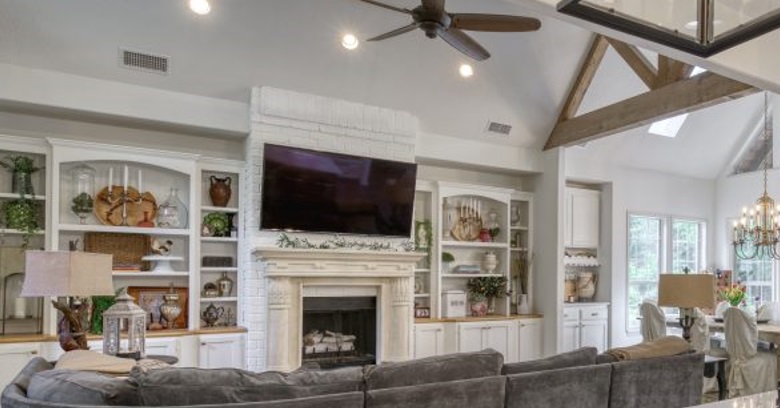
Thinking of hiring help with Home Remodel Contractors in College Station Texas?
Good Company Construction acts as the general contractor on additions, remodels, and whole-home projects around College Station Texas homeowners.
Dial 979-401-2527 to talk through what you want built or changed.
The Role Behind the Name on the Truck
Most homeowners comparing Home Remodel Contractors in College Station Texas soon learns that the title covers a lot of ground. A general contractor holds the contract for the whole project. The same contractor brings in the framers, electricians, plumbers, and finishers at the right times, and it holds the overall plan so the owner does not have to.
The role is quite different from performing one trade, and it is what many owners are really paying attention to. The trades are specialties in their own right, though what matters most is the order and the quality of the handoffs. Good Company Construction treats Home Remodel Contractors as a coordination job first and a building job second, and the schedule shows it from the first week.
Design-Build or Separate Designer and Builder: Two Ways to Organize a Project
On a design-build project, the designer and the builder work as one group from the start. The advantage is that building questions get asked while the plans are still easy to change, and one party is responsible when something needs to be adjusted.
Some owners prefer to have the plans drawn independently, and it works well when plans are already in hand. The drawings are finished before a builder is chosen, which suits owners who want an independent designer with a particular vision. Each approach fits some projects and not others, and a good contractor can explain how Home Remodel Contractors would work in either setup.
Additions Touch Every Part of the Building
A home addition ties into foundation, framing, roof, and mechanical systems that were set years before. The new foundation has to work with the old one, and the roof has to meet the existing one without trapping water. Extra square footage can overtax a system sized for the original rooms, and the equipment should be sized by calculation rather than guesswork.
Good framing is what makes the rest of an addition go right, and it is rarely the part owners photograph. Walls that are plumb, floors that are level, and openings that are square pay off later when cabinets and trim go in. Ask anyone in the trades, and they will say that rushed framing shows up as problems in every phase afterward.
Details That Decide Whether New Space Blends In
A new room that works inside the house may look foreign from the street, if the outside was not planned with the existing house in mind. Old siding and brick fade in the sun, which makes a perfect match difficult, and a thoughtful builder talks through those options with the owner.
Pitch, ridge height, and overhang tell the eye whether the new part belongs, and it is a detail that experienced builders watch closely. Repeating the existing slope, overhang, and trim lines pulls the two parts together, and it avoids the kind of junction that leaks after a big storm.
Mechanical Systems Have to Grow With the House
Every added room puts more demand on systems that were sized for the original house, and it adds up faster than most owners expect. Heat is the pressing issue across the state, so the air conditioning side deserves attention first, and it is much easier to run new ducts while the framing is open. The electrical panel and the plumbing supply deserve the same question, and it is part of every careful addition plan.
Thinking Through a Project That Touches the Whole House
A renovation that reaches most or all of a house brings the flow of the entire house into the plan. The question of where the family sleeps deserves an early answer, and the sequence of rooms is chosen with it in mind.
Older homes bring their own surprises, and a candid conversation early helps. Outdated electrical panels, older supply lines, and walls that were opened and closed before are better expected than hoped against. A flexible plan and an honest conversation about the unknowns make a whole-home project easier on everyone.
The Boring Part of the Job That Protects You
The more the work changes, the more likely it is that a permit is required. Every jurisdiction in the state decides for itself what work needs a permit, and the builder in charge typically handles the application. Homes in an association also answer to its design rules, and a builder familiar with the process can help.
How to Tell Whether a Contractor Is the Right Fit
Picking a contractor for an addition or remodel has a business side and a personal side. Ask which party deals with the city or county and the homeowners association, and find out who will be the point of contact when a question comes up.
A careful owner confirms that the documents the jurisdiction asks for are in order, and ask for the scope, the schedule, and any changes to them to be put in writing. Someone who has run many larger projects usually has a routine for each of them.
Building the Calendar for an Addition or Whole-Home Project
Good schedules begin with the items that cannot be rushed, and the date for each phase follows from it. Specialty orders can run longer than any other part of the project, so lead times are tracked from the first week.
If the family lives in the home during construction, work areas are separated from living areas. Clear boundaries between the work area and the living area turn a disruptive project into a manageable one. Owners who prepare for this ahead of time usually get a smoother experience.
Selections and Approvals: What the Owner Decides, and When
Every addition or remodel involves a long list of choices, and that part of the job is more demanding than it sounds. The visible selections that give a project its character all have to be settled early enough to be ordered and delivered on time. Contractors who list the choices and their due dates keeps the project from stalling on a missing choice.
A well-prepared drawing package works as a tool as well as a requirement, and each trade works from the same pages. Layouts, dimensions, and notes on the pages guide each trade through its part, so unclear plans lead to questions on site, repeated trips back to the drawings, and avoidable delays in the schedule.
How a Larger Project Comes to a Close
At the end of a larger project, each finished area gets checked one by one. Anything that needs attention goes on a short list and gets handled, and the paperwork is closed once the final inspection is passed.
When Home Remodel Contractors is the next step for your property in College Station Texas, Good Company Construction is a good place to begin a conversation about your plans. Phone 979-401-2527 to talk it over.
Verified

Verified
Verified
Verified