
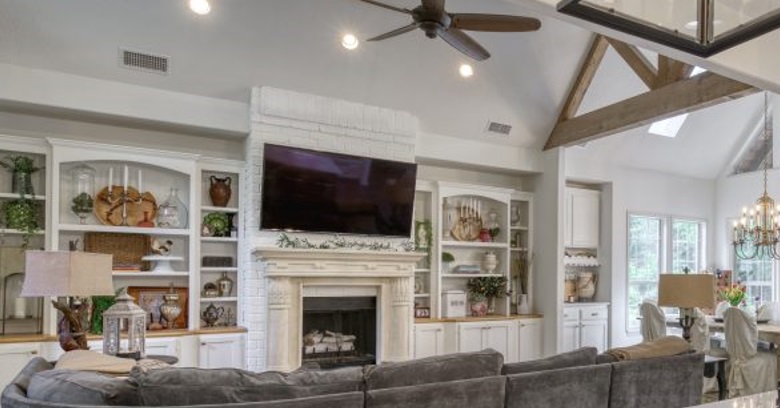
Trying to find Home Renovation Companies in College Station Texas?
Good Company Construction coordinates the people and the paperwork behind a home addition or remodel across College Station Texas families.
Phone 979-401-2527 to talk through what you want built or changed.
Why Bigger Home Projects Need One Person in Charge
An owner who has decided to explore Home Renovation Companies in College Station Texas quickly finds that the role is bigger than it sounds. A single contractor is accountable for the project as a whole. It sequences the subcontractors so they do not collide, and it keeps the pieces consistent from one trade to the next.
It is more about managing work than doing one kind of it, and the difference shows in how a project runs. Every trade has its own tools, methods, and rules, and the success of the job rests on the handoffs between them. Good Company Construction treats Home Renovation Companies as a coordination job first and a building job second, and owners feel the difference in how few calls they have to make.
Two Common Paths From Idea to Finished Home
If the project runs as design-build, the same firm handles both the design and the construction. It means the people who will build it help shape what gets drawn, and there is one place to go when a detail has to change.
The other path is a separate designer and builder, and some owners find it more familiar. The design stands on its own as a finished package, which suits owners who want an independent designer with a particular vision. Each approach fits some projects and not others, and a good contractor can explain how Home Renovation Companies would work in either setup.
Adding Space Means Changing the Structure
A bump-out or added wing has to be joined to a house that was built to different standards. The new foundation has to work with the old one, and flashing and slope at the junction decide whether it stays dry. Extra square footage can overtax a system sized for the original rooms, and the equipment should be sized by calculation rather than guesswork.
Everything else in an addition rests on the frame, and it is rarely the part owners photograph. Careful layout, accurate cuts, and checked measurements pay off later when cabinets and trim go in. Contractors who do this daily know, and the lesson is that time spent on the frame is time saved on the finish.
Why the Outside of an Addition Deserves Planning Too
A structurally sound addition may stand out from the rest of the house, when the roof pitch, siding, and window style were not carried through. After years of sun, an older exterior has a different tone than new material, and the owner should see the options before anything is ordered.
How the new roof meets the old one is what the eye catches, and it is a detail that experienced builders watch closely. Carrying the original pitch and overhang through to the new section keeps the house balanced, and it also helps water drain the way the original roof was designed to.
Mechanical Systems Have to Grow With the House
Existing equipment was matched to the original square footage, and it is a point worth raising early. A cooling system that kept the old rooms comfortable might struggle with a larger home through a long summer, and it is far simpler to size equipment on paper than to replace it later. Panels and pipes also have limits that an addition can reach, and a quick check can save a lot of rework.
Whole-Home Remodels: Planning the Entire House at Once
Work that touches every room brings the flow of the entire house into the plan. Living in the home during construction is possible for some projects, and the contractor can stage the rooms to leave a kitchen or bathroom usable as long as possible.
Older homes bring their own surprises, and experienced builders plan for that. Outdated electrical panels, older supply lines, and walls that were opened and closed before turn up often once the surface comes off. Setting expectations before the walls are opened keep a large project from turning into a dispute.
Why Permits Matter More as the Work Gets Bigger
Once a project goes beyond cosmetic updates, the more likely it is that a permit is required. The requirements in a city are not the same as in an unincorporated area, and the contractor of record normally takes care of pulling them. Subdivision rules may add an extra step, and the rules are usually easy to obtain from the association.
A Short List of Things to Settle Before Signing Anything
Hiring for a project that touches structure and systems is as much about communication as it is about construction. Ask who pulls the permits and who calls for the inspections, and learn how often the owner will hear about progress.
Ask to see the paperwork the town requires, and see that the work and the calendar are described in a document both sides can read. Firms that organize their work well usually has a routine for each of them.
The Order of Operations for a Bigger Home Project
Scheduling starts from the end date and works back through each phase, and the plan becomes a chain of dependencies. Specialty orders can run longer than any other part of the project, so the order of ordering matters as much as the order of building.
When the household stays in the house, the staging plan matters more. Dust barriers, a path for workers, and a clear plan for the kitchen and bathrooms make it practical to stay home while work goes on. Households that think it through before the work starts handle the weeks of construction with less stress.
The Owner Role in a Project That Runs on Time
There are many selections to make before and during a job, and the choices add up over a few weeks. Flooring, fixtures, finishes, windows, and hardware all have to be settled early enough to be ordered and delivered on time. When the contractor provides a schedule of decisions turns a long list into a manageable one.
Plans have a practical purpose beyond the permit, and well-prepared drawings save time. Layouts, dimensions, and notes on the pages guide each trade through its part, so the clearer the plans, the smoother the build.
Closing Out an Addition or Remodel
At the end of a larger project, a final look at every part of the work takes place with the owner. Loose ends are collected on a punch list and cleared, and the local building office completes its last check.
For homeowners ready to move ahead with Home Renovation Companies around College Station Texas, Good Company Construction is a good place to begin a conversation about your plans. Phone 979-401-2527 to explain what you are planning.
Verified

Verified
Verified
Verified
Verified