
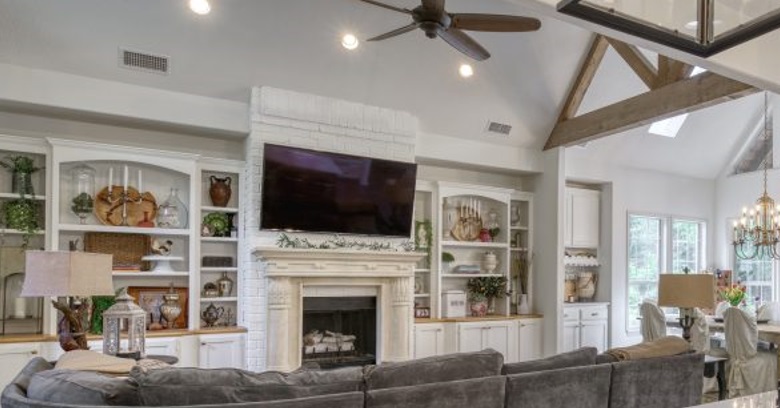
Trying to find Whole Home Remodeling Contractors in College Station Texas?
Good Company Construction manages the design, the trades, and the schedule on larger home projects across College Station Texas households.
Reach out at 979-401-2527 to start a conversation about your plans.
A General Contractor Is the Hub of the Whole Project
Anyone researching Whole Home Remodeling Contractors in College Station Texas discovers that the job description is wider than most expect. The contractor of record carries responsibility for how everything fits together. It makes sure each trade arrives when its part is ready, and it keeps the pieces consistent from one trade to the next.
It is more about managing work than doing one kind of it, and it is learned on job sites, not on paper. Carpentry, mechanical, and finish work are separate crafts, but a good result depends mostly on timing and coordination. Good Company Construction organizes Whole Home Remodeling Contractors so one plan connects every trade, and the plan stays in one place where every trade can see it.
One Team or Two? How Project Delivery Is Set Up
If the project runs as design-build, the designer and the builder work as one group from the start. Practical building knowledge goes into the drawings from the first sketch, and one party is responsible when something needs to be adjusted.
Some owners prefer to have the plans drawn independently, and it gives the owner two points of view. That produces a full set of plans that can be shared with different builders, which makes sense when the architecture is the main goal. Neither route is right for every project, and the choice rarely stops a project involving Whole Home Remodeling Contractors from moving forward.
What an Addition Changes About a House
A home addition must fit with everything already there. Two foundations of different ages move differently, and the connection has to allow for that, and the roofline has to be tied in so water sheds properly. Cooling load rises with every added room, and a hot summer shows it, and the result affects comfort for years.
Everything else in an addition rests on the frame, and it is worth watching closely. Straight walls, a flat floor, and square window and door openings pay off later when cabinets and trim go in. Ask anyone in the trades, and the point is that mistakes in the frame travel all the way to the paint.
Why the Outside of an Addition Deserves Planning Too
Quality work can still look like an afterthought, if nobody took the time to match the original lines. After years of sun, an older exterior has a different tone than new material, and a thoughtful builder talks through those options with the owner.
Pitch, ridge height, and overhang tell the eye whether the new part belongs, and the junction between old and new deserves extra attention. A roof that matches in slope and eave depth looks natural, and it avoids the kind of junction that leaks after a big storm.
What the Existing Systems Can and Cannot Carry
The air conditioner, the panel, and the water heater all came sized for the house as it was, and it adds up faster than most owners expect. Cooling capacity tends to be the system that shows a shortfall soonest, and a builder can have the equipment evaluated before the walls go up. Electrical service and water supply need to be checked for capacity too, and an upgrade is far easier before the walls are closed.
Whole-Home Remodels: Planning the Entire House at Once
A whole-home remodel, makeover, or redesign turns on how rooms connect, not just how each one looks. Staying put is often possible for phased work and harder for a full gut, and the schedule should reflect that choice from day one.
The older the house, the more likely something unexpected waits behind a wall, and it is simply part of working on existing buildings. Outdated electrical panels, older supply lines, and walls that were opened and closed before are better expected than hoped against. Planning for the unexpected rather than hoping it will not happen keep the relationship between owner and builder on solid ground.
The Boring Part of the Job That Protects You
When a home project involves walls, additions, or systems, the more likely it is that a permit is required. What applies to a lot in town may not apply in the country, and the general contractor is the one who deals with the office. Associations often want to see plans for exterior work first, and a builder familiar with the process can help.
Questions Worth Asking Before You Choose a Contractor
Deciding who should manage a home project should weigh how the work will be run as well as who runs it. Ask which party deals with the city or county and the homeowners association, and ask which parts of the work are done by the contractor's own people and which go to subcontractors.
Ask to see the paperwork the town requires, and expect the scope of work and the timeline to be written down clearly. Firms that organize their work well usually has a routine for each of them.
The Order of Operations for a Bigger Home Project
A schedule for a larger project is built backward from the items that take the longest, and everything else is arranged around it. Windows, doors, cabinets, and structural components can take weeks to arrive, so the buying schedule and the building schedule move together.
When the home remains occupied, work areas are separated from living areas. Sealed doorways, covered flooring, and a separate entrance for the trades make it practical to stay home while work goes on. Owners who prepare for this ahead of time are less surprised by what the job is like day to day.
The Owner Role in a Project That Runs on Time
Owners of a bigger job make dozens of selections, and it helps to know the due dates in advance. Doors, trim profiles, cabinet hardware, and surfaces have decision dates that work backward from the schedule. When the contractor provides a schedule of decisions turns a long list into a manageable one.
Drawings do more than meet the requirements of the building office, and the quality of the set shows throughout the job. Layouts, dimensions, and notes on the pages guide each trade through its part, so unclear plans lead to questions on site, repeated trips back to the drawings, and avoidable delays in the schedule.
How a Larger Project Comes to a Close
When the building work wraps up, there is a walk-through, room by room. Loose ends are collected on a punch list and cleared, and the local building office completes its last check.
When Whole Home Remodeling Contractors is the next step for your property in College Station Texas, Good Company Construction is ready to discuss how the project would be organized from start to finish. Get in touch at 979-401-2527 to explain what you are planning.
Verified

Verified
Verified
Verified