
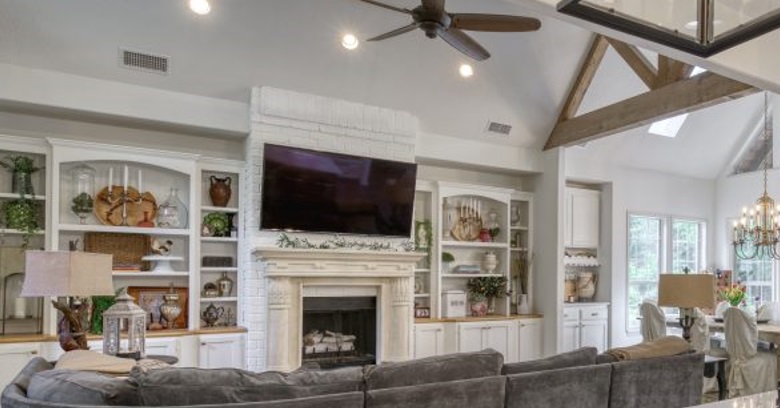
Looking for General Contracting Companies in Greater Bryan-College Station Area?
Good Company Construction manages the design, the trades, and the schedule on larger home projects across Greater Bryan-College Station Area property owners.
Phone 979-401-2527 to see how your project could be organized.
What You Are Really Hiring When You Hire for a Larger Project
People who look into General Contracting Companies in Greater Bryan-College Station Area quickly finds that the role is bigger than it sounds. The contractor of record carries responsibility for how everything fits together. It lines up the trades and the deliveries, and it keeps the pieces consistent from one trade to the next.
It sits above the individual trades rather than beside them, and it calls for a different set of skills. Every trade has its own tools, methods, and rules, but a good result depends mostly on timing and coordination. Good Company Construction organizes General Contracting Companies so one plan connects every trade, and owners feel the difference in how few calls they have to make.
Choosing How the Design and the Building Are Organized
If the project runs as design-build, design and construction sit under the same roof and the same contract. It means the people who will build it help shape what gets drawn, and there is one place to go when a detail has to change.
A second route is to have the drawings made by one party and built by another, and it gives the owner two points of view. That produces a full set of plans that can be shared with different builders, which fits owners who want to settle the design before choosing who builds it. Neither route is right for every project, and a builder can usually take on General Contracting Companies whether the plans are ready or not.
Why a Room Addition Is More Than a New Room
A room addition must fit with everything already there. The new foundation has to work with the old one, and the roof junction is where careful detailing pays off. The air conditioner and ductwork may need to grow with the house, and the result affects comfort for years.
Good framing is what makes the rest of an addition go right, and it is the stage where accuracy counts most. Walls that are plumb, floors that are level, and openings that are square pay off later when cabinets and trim go in. Ask anyone in the trades, and the answer is that corrections get harder with every layer that goes on top.
Details That Decide Whether New Space Blends In
An addition that is built well can still look out of place, when the roof pitch, siding, and window style were not carried through. Brick, siding, and trim age over time, so an exact match is sometimes hard to find, and a thoughtful builder talks through those options with the owner.
Roof shape is the detail most people notice first, and it is easy to see from the street. A roof that matches in slope and eave depth looks natural, and it limits the number of awkward valleys where leaves and water collect.
Mechanical Systems Have to Grow With the House
The air conditioner, the panel, and the water heater all came sized for the house as it was, and the numbers should be checked, not assumed. Heat is the pressing issue across the state, so the air conditioning side deserves attention first, and it is much easier to run new ducts while the framing is open. The electrical panel and the plumbing supply deserve the same question, and it is part of every careful addition plan.
When the Scope Is Every Room
A project that reshapes the whole house turns on how rooms connect, not just how each one looks. Staying put is often possible for phased work and harder for a full gut, and the order of work is chosen to keep the household functioning.
Previous owners may have changed things in ways that are not on any plan, and a candid conversation early helps. Hidden fixes that nobody documented turn up often once the surface comes off. Planning for the unexpected rather than hoping it will not happen can be a sign of a contractor who has done this before.
The Boring Part of the Job That Protects You
The larger the project, the more likely drawings have to be approved before work starts. Rules differ between cities, counties, and rural parcels, and the builder in charge typically handles the application. Subdivision rules may add an extra step, and it is wise to ask before anything is purchased.
Questions Worth Asking Before You Choose a Contractor
Choosing who will run a larger project comes down to both the formal side and the working relationship. Find out who is responsible for permits, inspections, and the final sign-off, and ask which parts of the work are done by the contractor's own people and which go to subcontractors.
Check that the credentials the local office expects are in place, and get the list of what is included, and what is not, set out in plain words. Someone who has run many larger projects tends to have a system behind the answers.
How a Larger Project Is Scheduled and Staged
A schedule for a larger project is built backward from the items that take the longest, and the date for each phase follows from it. Made-to-order items and engineered framing members have their own delivery timelines, so the sequence of purchases is planned alongside the sequence of work.
If nobody moves out, the project is usually organized in phases. Dust barriers, a path for workers, and a clear plan for the kitchen and bathrooms reduce the strain on a household living beside a job site. People who talk it over with the builder first are less surprised by what the job is like day to day.
Why Early Decisions Make for a Smoother Build
Every addition or remodel involves a long list of choices, and the choices add up over a few weeks. Doors, trim profiles, cabinet hardware, and surfaces all carry deadlines that are set by delivery times. When the contractor provides a schedule of decisions helps everyone know what has to be done next.
A well-prepared drawing package works as a tool as well as a requirement, and they are the reference for every decision on site. Each specialist pulls different information from the same sheets, from wall locations to fixture positions, so the quality of the drawings shows up in how the work goes.
From Final Inspection to the Final Walk-Through
When the building work wraps up, the owner and the contractor go through the space together. Loose ends are collected on a punch list and cleared, and the paperwork is closed once the final inspection is passed.
When General Contracting Companies is the next step for your property in Greater Bryan-College Station Area, Good Company Construction is a good place to begin a conversation about your plans. Phone 979-401-2527 to explain what you are planning.