
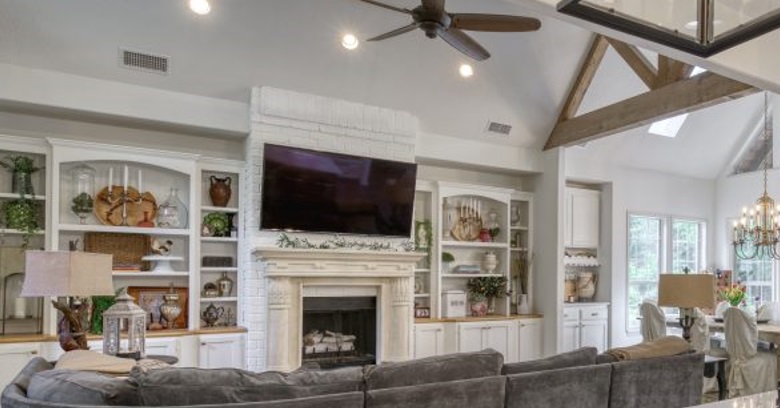
Trying to find Home Addition Services in Greater Bryan-College Station Area?
Good Company Construction manages the design, the trades, and the schedule on larger home projects around Greater Bryan-College Station Area households.
Phone 979-401-2527 to see how your project could be organized.
A General Contractor Is the Hub of the Whole Project
Most homeowners comparing Home Addition Services in Greater Bryan-College Station Area soon learns that the title covers a lot of ground. A general contractor holds the contract for the whole project. It sequences the subcontractors so they do not collide, and it holds the overall plan so the owner does not have to.
The role is quite different from performing one trade, and the difference shows in how a project runs. Each trade needs real experience in its own area, and the success of the job rests on the handoffs between them. Good Company Construction builds its approach to Home Addition Services around that coordination, and the plan stays in one place where every trade can see it.
Choosing How the Design and the Building Are Organized
When a project is delivered design-build, design and construction sit under the same roof and the same contract. That lets practical questions about structure and sequence shape the design early, and there is one place to go when a detail has to change.
A second route is to have the drawings made by one party and built by another, and some owners find it more familiar. The drawings are finished before a builder is chosen, which fits owners who want to settle the design before choosing who builds it. Each approach fits some projects and not others, and the choice rarely stops a project involving Home Addition Services from moving forward.
Why a Room Addition Is More Than a New Room
A room addition is not a freestanding building. Two foundations of different ages move differently, and the connection has to allow for that, and where the two roofs meet is a classic spot for leaks if it is rushed. The existing equipment may or may not be enough for the added space, and the equipment should be sized by calculation rather than guesswork.
Framing is the quiet center of most additions, and it is the stage where accuracy counts most. A frame laid out accurately and checked against the plans make every later trade's work easier. Ask anyone in the trades, and the lesson is that time spent on the frame is time saved on the finish.
Making an Addition Look Like It Was Always There
An addition that is built well can still look out of place, unless the details of the original home were studied first. Weathered exterior materials rarely match fresh ones perfectly, and the choice is better made in the plan than on site.
Rooflines are where an addition most often gives itself away, and it is easy to see from the street. Matching the slope and the depth of the eaves is a simple way to make the addition look planned, and it avoids the kind of junction that leaks after a big storm.
Heating, Cooling, Electrical, and Plumbing Need a Second Look
New space means more load on the equipment that was installed for less, and the numbers should be checked, not assumed. Long hot summers put the most strain on cooling, so capacity is worth checking early, and it is far simpler to size equipment on paper than to replace it later. Wiring and plumbing have capacity limits of their own, and the findings go into the scope of work.
Thinking Through a Project That Touches the Whole House
A full-house renovation needs a plan for how the house will be lived in during the work. Living in the home during construction is possible for some projects, and the order of work is chosen to keep the household functioning.
A house that has been in the neighborhood a long time often has a history behind its walls, and experienced builders plan for that. Systems that were adequate for older habits but not for current ones turn up often once the surface comes off. Setting expectations before the walls are opened keep the relationship between owner and builder on solid ground.
The Boring Part of the Job That Protects You
As soon as a job alters structure, adds space, or moves systems, the more probable it becomes that inspections apply. The requirements in a city are not the same as in an unincorporated area, and the paperwork usually runs through the builder. Neighborhood rules on color, height, and materials can shape what is allowed, and that approval can take a while.
Questions Worth Asking Before You Choose a Contractor
Choosing who will run a larger project comes down to both the formal side and the working relationship. A sensible first question is who handles the approvals from the local office, and find out who will be the point of contact when a question comes up.
Owners should expect to be able to confirm that the local paperwork is handled, and ask for the scope, the schedule, and any changes to them to be put in writing. A contractor who answers these questions easily will often have a ready answer for every item.
The Order of Operations for a Bigger Home Project
Scheduling starts from the end date and works back through each phase, and the plan becomes a chain of dependencies. Made-to-order items and engineered framing members have their own delivery timelines, so the sequence of purchases is planned alongside the sequence of work.
When the home remains occupied, the staging plan matters more. A plan for water, power, and a working bathroom throughout help a family get through the weeks of construction. Families that plan the daily routine around the work get through the work with fewer frustrations.
The Owner Role in a Project That Runs on Time
The owner role is mostly deciding, and there is a lot to decide, and that part of the job is more demanding than it sounds. The visible selections that give a project its character have decision dates that work backward from the schedule. A clear list of selections with dates attached keeps the project from stalling on a missing choice.
A well-prepared drawing package works as a tool as well as a requirement, and each trade works from the same pages. Framers use them to lay out walls, electricians to place outlets, and plumbers to route supply and drain lines, so unclear plans lead to questions on site, repeated trips back to the drawings, and avoidable delays in the schedule.
The Last Phase of a Contractor's Job
When the last trade has finished, the owner and the contractor go through the space together. Small items that are off are noted and corrected, and the local building office completes its last check.
When Home Addition Services is the next step for your property in Greater Bryan-College Station Area, Good Company Construction can start with a conversation about the scope, the plans, and the order of work. Reach us at 979-401-2527 to begin sorting out the first steps.