
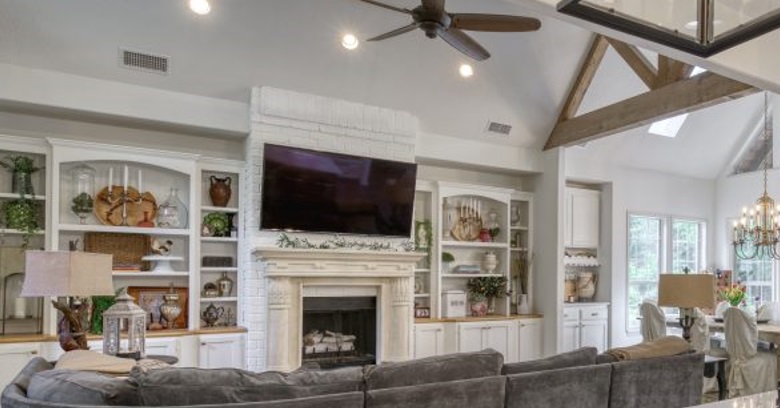
Thinking of hiring help with Room Addition to Home Companies in Greater Bryan-College Station Area?
Good Company Construction pulls the plans, the permits, and the subcontractors together under one plan for Greater Bryan-College Station Area homeowners.
Call 979-401-2527 to describe the project you are picturing.
What You Are Really Hiring When You Hire for a Larger Project
A homeowner who starts by searching for Room Addition to Home Companies in Greater Bryan-College Station Area finds that one name stands for many different tasks. One firm takes charge of the entire scope and answers for it. It makes sure each trade arrives when its part is ready, and it answers for the result.
The work is management as much as building, and the difference shows in how a project runs. Each trade needs real experience in its own area, but a project fails or succeeds on how well they fit together. Good Company Construction organizes Room Addition to Home Companies so one plan connects every trade, and the schedule shows it from the first week.
One Team or Two? How Project Delivery Is Set Up
If the project runs as design-build, design and construction sit under the same roof and the same contract. It means the people who will build it help shape what gets drawn, and there is one place to go when a detail has to change.
A second route is to have the drawings made by one party and built by another, and it works well when plans are already in hand. The owner gets a complete set of drawings that any contractor can build from, which works well for projects where the design is the centerpiece. Neither path is better in every case, and a good contractor can explain how Room Addition to Home Companies would work in either setup.
Why a Room Addition Is More Than a New Room
New space added to a house is not a freestanding building. Two foundations of different ages move differently, and the connection has to allow for that, and flashing and slope at the junction decide whether it stays dry. Extra square footage can overtax a system sized for the original rooms, and the result affects comfort for years.
The frame carries the whole job, and it is rarely the part owners photograph. Careful layout, accurate cuts, and checked measurements set the stage for a clean finish. Contractors who do this daily know, and the answer is that corrections get harder with every layer that goes on top.
Siding, Rooflines, and Windows: Where New Meets Existing
Quality work can still look like an afterthought, unless the details of the original home were studied first. After years of sun, an older exterior has a different tone than new material, and the choice is better made in the plan than on site.
Roof shape is the detail most people notice first, and the junction between old and new deserves extra attention. A roof that matches in slope and eave depth looks natural, and it avoids the kind of junction that leaks after a big storm.
Why Added Space Raises Questions About Capacity
New space means more load on the equipment that was installed for less, and it is a point worth raising early. Cooling capacity tends to be the system that shows a shortfall soonest, and checking the load in advance prevents rework. The electrical panel and the plumbing supply deserve the same question, and the answer shapes the plan.
Thinking Through a Project That Touches the Whole House
A whole-home remodel, makeover, or redesign brings the flow of the entire house into the plan. Staying put is often possible for phased work and harder for a full gut, and the plan is shaped accordingly.
Previous owners may have changed things in ways that are not on any plan, and experienced builders plan for that. Hidden fixes that nobody documented are usually discovered during demolition. A schedule that leaves room for what turns up keep a large project from turning into a dispute.
The Approval Side of an Addition or Remodel
When a home project involves walls, additions, or systems, the more likely drawings have to be approved before work starts. The requirements in a city are not the same as in an unincorporated area, and the general contractor is the one who deals with the office. Subdivision rules may add an extra step, and it is wise to ask before anything is purchased.
The Conversation to Have Before the Work Begins
Selecting the firm that will take charge of the work comes down to both the formal side and the working relationship. Ask who pulls the permits and who calls for the inspections, and ask who will be on the job day to day and who the owner can reach.
Owners should expect to be able to confirm that the local paperwork is handled, and expect the scope of work and the timeline to be written down clearly. Firms that organize their work well tends to have a system behind the answers.
The Order of Operations for a Bigger Home Project
Good schedules begin with the items that cannot be rushed, and that is why ordering starts early. Specialty orders can run longer than any other part of the project, so the buying schedule and the building schedule move together.
When the home remains occupied, the contractor plans how to keep part of the house livable. Clear boundaries between the work area and the living area turn a disruptive project into a manageable one. Households that think it through before the work starts usually get a smoother experience.
Owner Choices That Keep a Project on Schedule
The owner role is mostly deciding, and there is a lot to decide, and the choices add up over a few weeks. Doors, trim profiles, cabinet hardware, and surfaces all have to be settled early enough to be ordered and delivered on time. Contractors who list the choices and their due dates makes it easy to see what is coming.
A well-prepared drawing package works as a tool as well as a requirement, and each trade works from the same pages. Each specialist pulls different information from the same sheets, from wall locations to fixture positions, so a set that leaves gaps tends to produce mistakes in the field.
Closing Out an Addition or Remodel
When the last trade has finished, the contractor and the owner inspect the finished project side by side. Any touch-ups are written down and completed before the job is closed, and the permit is finished once the inspector approves.
For Room Addition to Home Companies in Greater Bryan-College Station Area, Good Company Construction welcomes a first conversation about what you have in mind. Phone 979-401-2527 to explain what you are planning.