
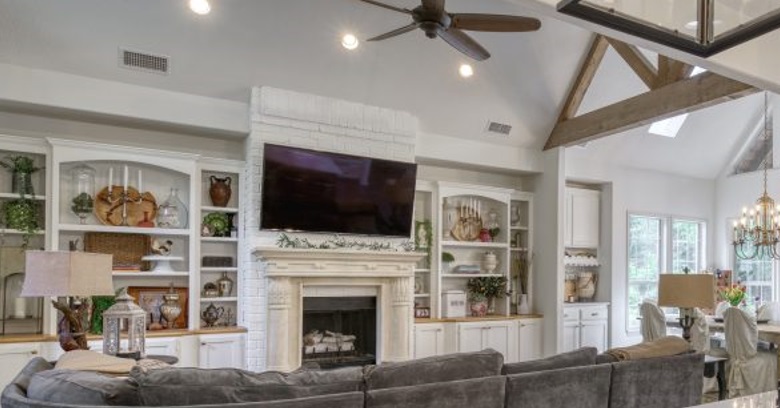
Ready to talk with Room Additions in Greater Bryan-College Station Area?
Good Company Construction coordinates the people and the paperwork behind a home addition or remodel around Greater Bryan-College Station Area households.
Reach out at 979-401-2527 to describe the project you are picturing.
What You Are Really Hiring When You Hire for a Larger Project
An owner who has decided to explore Room Additions in Greater Bryan-College Station Area finds that one name stands for many different tasks. One firm takes charge of the entire scope and answers for it. It lines up the trades and the deliveries, and it spares the owner from refereeing between trades.
It sits above the individual trades rather than beside them, and it is learned on job sites, not on paper. The trades are specialties in their own right, but a project fails or succeeds on how well they fit together. Good Company Construction treats Room Additions as a coordination job first and a building job second, and every phase is planned with the next one in mind.
Choosing How the Design and the Building Are Organized
On a design-build project, the same firm handles both the design and the construction. The advantage is that building questions get asked while the plans are still easy to change, and one party is responsible when something needs to be adjusted.
The other path is a separate designer and builder, and it divides the work in a clear way. The owner gets a complete set of drawings that any contractor can build from, which appeals to owners with a strong design in mind. Neither route is right for every project, and the choice rarely stops a project involving Room Additions from moving forward.
What an Addition Changes About a House
A home addition must fit with everything already there. The new foundation has to work with the old one, and the roof has to meet the existing one without trapping water. Heating and cooling capacity also deserves a second look, and the answer should come before the plans are final.
Framing is the quiet center of most additions, and it hides behind drywall once the job is done. Straight walls, a flat floor, and square window and door openings set the stage for a clean finish. Contractors who do this daily know, and the lesson is that time spent on the frame is time saved on the finish.
Matching the New Work to the Old House
A new room that works inside the house may look foreign from the street, if the outside was not planned with the existing house in mind. After years of sun, an older exterior has a different tone than new material, and a good plan decides whether to match, blend, or deliberately contrast.
Rooflines are where an addition most often gives itself away, and it affects both looks and leaks. Matching the slope and the depth of the eaves is a simple way to make the addition look planned, and it also helps water drain the way the original roof was designed to.
Why Added Space Raises Questions About Capacity
A house is sized as a system, and an addition changes the total, and it is a point worth raising early. Cooling capacity tends to be the system that shows a shortfall soonest, and it is much easier to run new ducts while the framing is open. The same is true of the breaker panel and the water lines, and a quick check can save a lot of rework.
When the Scope Is Every Room
Work that touches every room turns on how rooms connect, not just how each one looks. The question of where the family sleeps deserves an early answer, and the schedule should reflect that choice from day one.
A house that has been in the neighborhood a long time often has a history behind its walls, and experienced builders plan for that. Hidden fixes that nobody documented are usually discovered during demolition. A schedule that leaves room for what turns up make a whole-home project easier on everyone.
Why Permits Matter More as the Work Gets Bigger
When a home project involves walls, additions, or systems, the more likely drawings have to be approved before work starts. The requirements in a city are not the same as in an unincorporated area, and the builder in charge typically handles the application. Homes in an association also answer to its design rules, and the rules are usually easy to obtain from the association.
The Conversation to Have Before the Work Begins
Picking a contractor for an addition or remodel is as much about communication as it is about construction. A sensible first question is who handles the approvals from the local office, and learn how often the owner will hear about progress.
Check that the credentials the local office expects are in place, and expect the scope of work and the timeline to be written down clearly. Firms that organize their work well is used to being asked and does not mind.
Why Staging Matters When the House Stays Occupied
Scheduling starts from the end date and works back through each phase, and the plan becomes a chain of dependencies. Made-to-order items and engineered framing members have their own delivery timelines, so the order of ordering matters as much as the order of building.
For projects with the owners at home, work areas are separated from living areas. Sealed doorways, covered flooring, and a separate entrance for the trades turn a disruptive project into a manageable one. Owners who prepare for this ahead of time tend to find a larger project far easier to live with.
Why Early Decisions Make for a Smoother Build
The owner role is mostly deciding, and there is a lot to decide, and a little preparation makes it much easier. Tile, lighting, paint colors, and plumbing fixtures all have to be settled early enough to be ordered and delivered on time. When the contractor provides a schedule of decisions saves the owner from last-minute pressure.
Plans have a practical purpose beyond the permit, and the quality of the set shows throughout the job. The set tells the framer where the walls go and the finisher where the trim goes, so a set that leaves gaps tends to produce mistakes in the field.
The Last Phase of a Contractor's Job
When the last trade has finished, a final look at every part of the work takes place with the owner. Anything that needs attention goes on a short list and gets handled, and the permit is finished once the inspector approves.
When Room Additions is the next step for your property in Greater Bryan-College Station Area, Good Company Construction is a good place to begin a conversation about your plans. Phone 979-401-2527 to explain what you are planning.