
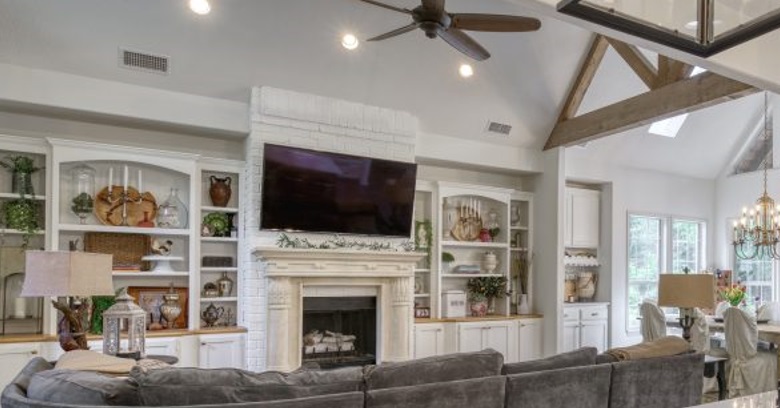
Ready to talk with Whole Home Remodels in Greater Bryan-College Station Area?
Good Company Construction pulls the plans, the permits, and the subcontractors together under one plan on Greater Bryan-College Station Area homeowners.
Reach out at 979-401-2527 to start a conversation about your plans.
What a General Contractor Actually Does
An owner who has decided to explore Whole Home Remodels in Greater Bryan-College Station Area discovers that the job description is wider than most expect. The contractor of record carries responsibility for how everything fits together. It lines up the trades and the deliveries, and it answers for the result.
The work is management as much as building, and the difference shows in how a project runs. Framing, wiring, plumbing, and finishing each take skill, and the success of the job rests on the handoffs between them. Good Company Construction organizes Whole Home Remodels so one plan connects every trade, and every phase is planned with the next one in mind.
One Team or Two? How Project Delivery Is Set Up
When a project is delivered design-build, design and construction sit under the same roof and the same contract. The advantage is that building questions get asked while the plans are still easy to change, and one party is responsible when something needs to be adjusted.
The alternative is to hire an architect or designer first, and it has been used for many successful projects. That produces a full set of plans that can be shared with different builders, which suits owners who want an independent designer with a particular vision. Neither route is right for every project, and a good contractor can explain how Whole Home Remodels would work in either setup.
Additions Touch Every Part of the Building
A bump-out or added wing must fit with everything already there. Joining a new foundation to an old one needs careful planning in soil that shifts, and flashing and slope at the junction decide whether it stays dry. Cooling load rises with every added room, and a hot summer shows it, and the result affects comfort for years.
Framing is the quiet center of most additions, and it is the stage where accuracy counts most. Plumb, level, and square framing save the finish carpenters from fighting crooked surfaces. Anyone who has worked on a job site will say, and the lesson is that time spent on the frame is time saved on the finish.
Matching the New Work to the Old House
Good construction does not always mean a good match, when the exterior details were chosen separately. Brick, siding, and trim age over time, so an exact match is sometimes hard to find, and a good plan decides whether to match, blend, or deliberately contrast.
Roof shape is the detail most people notice first, and it is a detail that experienced builders watch closely. Keeping the same slope and overhang makes the whole building read as one design, and it keeps the roof shedding water in a predictable way.
Behind the Walls: Systems That Must Handle More
New space means more load on the equipment that was installed for less, and the same thinking applies to every system in the house. Long hot summers put the most strain on cooling, so capacity is worth checking early, and it is usually easier to plan for that during design than to correct it afterward. Panels and pipes also have limits that an addition can reach, and it is part of every careful addition plan.
Whole-Home Remodels: Planning the Entire House at Once
A whole-home remodel, makeover, or redesign asks the owner to think about how every space works together. The question of where the family sleeps deserves an early answer, and the order of work is chosen to keep the household functioning.
Previous owners may have changed things in ways that are not on any plan, and it is easiest to handle with a flexible plan. Hidden fixes that nobody documented are usually discovered during demolition. A flexible plan and an honest conversation about the unknowns can be a sign of a contractor who has done this before.
Plans, Permits, and the Paperwork Behind a Larger Project
As soon as a job alters structure, adds space, or moves systems, the more likely the local building office needs to see plans. Rules differ between cities, counties, and rural parcels, and the contractor of record normally takes care of pulling them. An HOA can require approval of exterior changes before permits are even requested, and it is wise to ask before anything is purchased.
Questions Worth Asking Before You Choose a Contractor
Selecting the firm that will take charge of the work should weigh how the work will be run as well as who runs it. Make sure it is clear who applies for permits and who schedules inspections, and find out who will be the point of contact when a question comes up.
Check that the credentials the local office expects are in place, and get the list of what is included, and what is not, set out in plain words. Someone who has run many larger projects will often have a ready answer for every item.
Planning Phases So the Household Can Keep Functioning
Planning a bigger job begins with the slowest-arriving materials, and the plan becomes a chain of dependencies. Items ordered to size often arrive long after standard stock does, so lead times are tracked from the first week.
For projects with the owners at home, staging becomes important. Temporary walls, protected floors, and a defined work zone reduce the strain on a household living beside a job site. Owners who prepare for this ahead of time usually get a smoother experience.
Why Early Decisions Make for a Smoother Build
A larger project asks the owner to choose many things, and the choices add up over a few weeks. The visible selections that give a project its character all carry deadlines that are set by delivery times. When the contractor provides a schedule of decisions turns a long list into a manageable one.
Plans have a practical purpose beyond the permit, and they are the reference for every decision on site. Framers use them to lay out walls, electricians to place outlets, and plumbers to route supply and drain lines, so the quality of the drawings shows up in how the work goes.
Finishing the Project and Handing It Over
Once construction is done, the owner and the contractor go through the space together. Whatever is not right gets fixed before the project is called done, and the local building office completes its last check.
If your plans in Greater Bryan-College Station Area include Whole Home Remodels, Good Company Construction is ready to discuss how the project would be organized from start to finish. Reach us at 979-401-2527 to begin sorting out the first steps.