
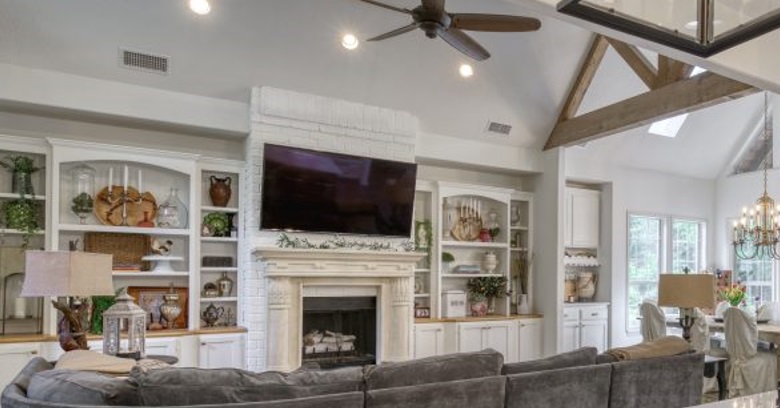
Looking for Contractors in College Station Texas?
Good Company Construction takes responsibility for the building side of a home project from layout to finish across College Station Texas families.
Phone 979-401-2527 to ask how a project like yours would be run.
What a General Contractor Actually Does
People who look into Contractors in College Station Texas soon learns that the title covers a lot of ground. The general contractor is the party responsible for the overall job. It sequences the subcontractors so they do not collide, and it spares the owner from refereeing between trades.
The role is quite different from performing one trade, and it calls for a different set of skills. The trades are specialties in their own right, but a project fails or succeeds on how well they fit together. Good Company Construction organizes Contractors so one plan connects every trade, and the schedule shows it from the first week.
Choosing How the Design and the Building Are Organized
With a design-build arrangement, design and construction sit under the same roof and the same contract. The advantage is that building questions get asked while the plans are still easy to change, and the owner deals with one point of contact.
The alternative is to hire an architect or designer first, and some owners find it more familiar. The plans become a document that several contractors can study, which works well for projects where the design is the centerpiece. Neither path is better in every case, and a conversation about Contractors in College Station Texas can start from either one.
What an Addition Changes About a House
A room addition connects to a structure that already has its own foundation, roofline, and systems. A new slab or pier line must be made compatible with the existing foundation, and the roof junction is where careful detailing pays off. Heating and cooling capacity also deserves a second look, and the answer should come before the plans are final.
Framing is the quiet center of most additions, and it is the stage where accuracy counts most. Careful layout, accurate cuts, and checked measurements make trim, cabinets, and doors fit without fuss. Anyone who has worked on a job site will say, and the point is that mistakes in the frame travel all the way to the paint.
Matching the New Work to the Old House
Good construction does not always mean a good match, when the exterior details were chosen separately. Old siding and brick fade in the sun, which makes a perfect match difficult, and the plan has to choose whether to match closely or to set the new section apart on purpose.
Pitch, ridge height, and overhang tell the eye whether the new part belongs, and it affects both looks and leaks. A roof that matches in slope and eave depth looks natural, and it makes the rainwater path easier to manage.
Mechanical Systems Have to Grow With the House
Existing equipment was matched to the original square footage, and the same thinking applies to every system in the house. Heat is the pressing issue across the state, so the air conditioning side deserves attention first, and it is usually easier to plan for that during design than to correct it afterward. Wiring and plumbing have capacity limits of their own, and the answer shapes the plan.
Whole-Home Remodels: Planning the Entire House at Once
A full-house renovation raises questions that single-room projects never face. The question of where the family sleeps deserves an early answer, and the schedule should reflect that choice from day one.
Previous owners may have changed things in ways that are not on any plan, and experienced builders plan for that. Outdated electrical panels, older supply lines, and walls that were opened and closed before turn up often once the surface comes off. A schedule that leaves room for what turns up can be a sign of a contractor who has done this before.
Why Permits Matter More as the Work Gets Bigger
When a home project involves walls, additions, or systems, the more likely the local building office needs to see plans. Rules differ between cities, counties, and rural parcels, and the contractor of record normally takes care of pulling them. Homes in an association also answer to its design rules, and skipping the step can force changes later.
Questions Worth Asking Before You Choose a Contractor
Deciding who should manage a home project has a business side and a personal side. Make sure it is clear who applies for permits and who schedules inspections, and ask which parts of the work are done by the contractor's own people and which go to subcontractors.
Check that the credentials the local office expects are in place, and get the list of what is included, and what is not, set out in plain words. A builder who is comfortable with these questions tends to have a system behind the answers.
How a Larger Project Is Scheduled and Staged
Scheduling starts from the end date and works back through each phase, and that is why ordering starts early. Items ordered to size often arrive long after standard stock does, so the buying schedule and the building schedule move together.
When the household stays in the house, work areas are separated from living areas. Temporary walls, protected floors, and a defined work zone keep daily life going while the building work continues. People who talk it over with the builder first usually get a smoother experience.
The Owner Role in a Project That Runs on Time
A larger project asks the owner to choose many things, and that part of the job is more demanding than it sounds. Doors, trim profiles, cabinet hardware, and surfaces must be decided ahead of the day they are needed. When the contractor provides a schedule of decisions makes it easy to see what is coming.
Plans have a practical purpose beyond the permit, and the quality of the set shows throughout the job. Each specialist pulls different information from the same sheets, from wall locations to fixture positions, so unclear plans lead to questions on site, repeated trips back to the drawings, and avoidable delays in the schedule.
How a Larger Project Comes to a Close
Once construction is done, a final look at every part of the work takes place with the owner. Anything that needs attention goes on a short list and gets handled, and the town's final inspection signs off on the building work.
For homeowners ready to move ahead with Contractors around College Station Texas, Good Company Construction can start with a conversation about the scope, the plans, and the order of work. Dial 979-401-2527 to begin sorting out the first steps.
Verified

Verified
Verified
Verified
Verified