
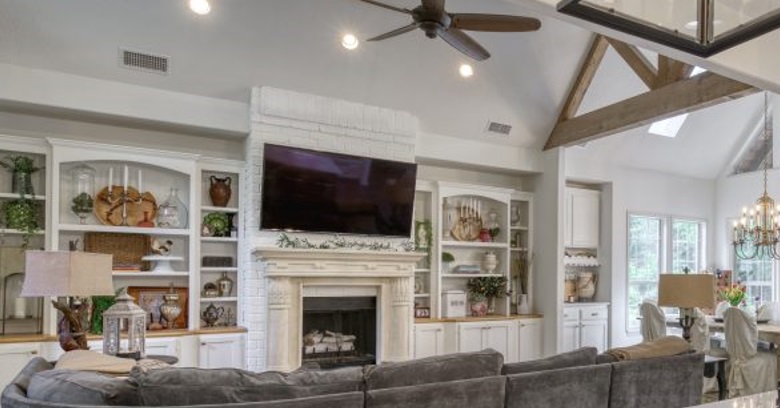
Trying to find Room Addition to Homes in Greater Bryan-College Station Area?
Good Company Construction coordinates the people and the paperwork behind a home addition or remodel around Greater Bryan-College Station Area households.
Phone 979-401-2527 to describe the project you are picturing.
What a General Contractor Actually Does
An owner who has decided to explore Room Addition to Homes in Greater Bryan-College Station Area learns that the work behind the title is mostly coordination. A single contractor is accountable for the project as a whole. It lines up the trades and the deliveries, and it stands behind how the finished work fits together.
It is more about managing work than doing one kind of it, and the difference shows in how a project runs. Each trade needs real experience in its own area, though what matters most is the order and the quality of the handoffs. Good Company Construction treats Room Addition to Homes as a coordination job first and a building job second, and that focus is what holds a larger project together.
Two Common Paths From Idea to Finished Home
If the project runs as design-build, design and construction sit under the same roof and the same contract. That lets practical questions about structure and sequence shape the design early, and there is one place to go when a detail has to change.
Another way to organize the work is design first, then bids from builders, and it gives the owner two points of view. The owner gets a complete set of drawings that any contractor can build from, which makes sense when the architecture is the main goal. Neither route is right for every project, and a builder can usually take on Room Addition to Homes whether the plans are ready or not.
What an Addition Changes About a House
A room addition must fit with everything already there. The new foundation has to work with the old one, and flashing and slope at the junction decide whether it stays dry. Heating and cooling capacity also deserves a second look, and an HVAC specialist can usually answer it quickly.
Everything else in an addition rests on the frame, and it is rarely the part owners photograph. Careful layout, accurate cuts, and checked measurements make every later trade's work easier. Anyone who has worked on a job site will say, and they will say that a poor frame is hard to hide.
Matching the New Work to the Old House
A new room that works inside the house may look foreign from the street, when the roof pitch, siding, and window style were not carried through. Brick, siding, and trim age over time, so an exact match is sometimes hard to find, and a thoughtful builder talks through those options with the owner.
Pitch, ridge height, and overhang tell the eye whether the new part belongs, and it is a detail that experienced builders watch closely. Keeping the same slope and overhang makes the whole building read as one design, and it limits the number of awkward valleys where leaves and water collect.
What the Existing Systems Can and Cannot Carry
Every added room puts more demand on systems that were sized for the original house, and the same thinking applies to every system in the house. Cooling capacity tends to be the system that shows a shortfall soonest, and checking the load in advance prevents rework. The same is true of the breaker panel and the water lines, and a quick check can save a lot of rework.
Bigger Scope, Bigger Planning Needs
A whole-home remodel, makeover, or redesign turns on how rooms connect, not just how each one looks. The question of where the family sleeps deserves an early answer, and the sequence of rooms is chosen with it in mind.
The older the house, the more likely something unexpected waits behind a wall, and it is easiest to handle with a flexible plan. Hidden fixes that nobody documented are better expected than hoped against. Setting expectations before the walls are opened help the whole job go more smoothly.
The Approval Side of an Addition or Remodel
The more the work changes, the more likely it is that a permit is required. What applies to a lot in town may not apply in the country, and the general contractor is the one who deals with the office. Associations often want to see plans for exterior work first, and the rules are usually easy to obtain from the association.
What to Ask When You Compare Contractors
Picking a contractor for an addition or remodel should weigh how the work will be run as well as who runs it. Find out who is responsible for permits, inspections, and the final sign-off, and find out who will be the point of contact when a question comes up.
Owners should expect to be able to confirm that the local paperwork is handled, and get the list of what is included, and what is not, set out in plain words. Firms that organize their work well will often have a ready answer for every item.
The Order of Operations for a Bigger Home Project
Planning a bigger job begins with the slowest-arriving materials, and that is why ordering starts early. Some orders have to be placed before the permit is even issued, so lead times are tracked from the first week.
If nobody moves out, staging becomes important. Temporary walls, protected floors, and a defined work zone turn a disruptive project into a manageable one. Families that plan the daily routine around the work usually get a smoother experience.
The Owner Role in a Project That Runs on Time
Owners of a bigger job make dozens of selections, and that part of the job is more demanding than it sounds. Doors, trim profiles, cabinet hardware, and surfaces must be decided ahead of the day they are needed. Contractors who list the choices and their due dates saves the owner from last-minute pressure.
The plans are the shared language of the whole project, and each trade works from the same pages. The set tells the framer where the walls go and the finisher where the trim goes, so the quality of the drawings shows up in how the work goes.
The Last Phase of a Contractor's Job
When the last trade has finished, there is a walk-through, room by room. Anything that needs attention goes on a short list and gets handled, and the town's final inspection signs off on the building work.
For anyone in Greater Bryan-College Station Area with a project involving Room Addition to Homes, Good Company Construction can walk through how a project like yours would be planned and staged. Phone 979-401-2527 to describe the home you have in mind.