
Planning Commercial Renovation Contractors in Greater Bryan-College Station Area?
Good Company Construction plans commercial renovations around the way the business or congregation actually operates for Greater Bryan-College Station Area congregations.
Ring 979-401-2527 to start with how your business uses the space today.
Every Commercial Update Begins With a Question About Daily Use
Anyone weighing Commercial Renovation Contractors in Greater Bryan-College Station Area for a business or a congregation tend to discover that the building is only half the question. A restaurant has to serve customers, an office has to answer phones, and a church has to hold services, and the construction plan has to start from those limits.
Good Company Construction begins Commercial Renovation Contractors with questions about the operation, because the construction sequence follows from them.
Working in an Occupied Building: Phasing and Access
For projects in occupied spaces, the contractor splits the job into zones and finishes one before opening the next. Temporary walls, dust barriers, and protected walkways keep the public away from the work, and worker access stays out of the public eye.
Work that affects power, water, or access is often scheduled for off hours. Shutting down power to a panel, cutting into a slab, or refinishing a floor are put on the calendar well ahead so the owner can plan around them.
The Code Questions That Apply to Public Buildings
Offices, shops, and gathering spaces are held to rules on accessibility, fire protection, and safe exits that a house does not face. The scope of the work often decides how much of the building has to be looked at again, so those questions belong in the first meeting and not the last.
Occupancy type matters too. Meeting halls, clinics, classroom wings, and warehouse showrooms are treated differently by the codes that govern them. What one town asks for may differ from the next town over, so the safe approach is to ask rather than assume.
Does the Building Have Enough Power and Cooling for the New Layout?
Rearranging a space rearranges its utility needs. Extra computers, kitchen equipment, lighting, and cooling load can outgrow an old electrical panel, so upgrades can be planned instead of improvised. Pathways for low-voltage cabling belong in the drawings from the start.
Hidden Conditions in Aging Commercial Space
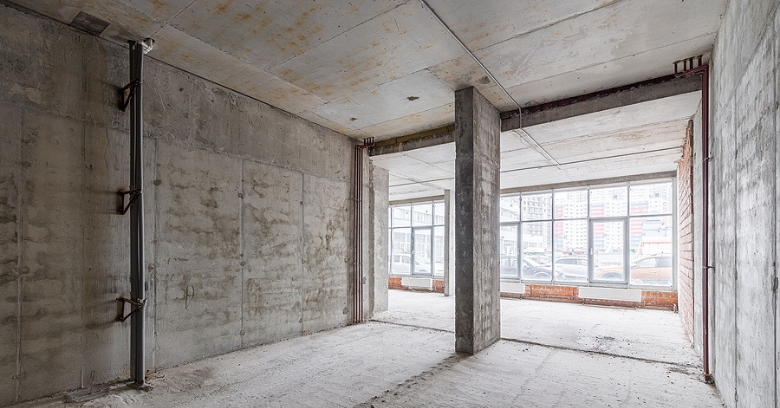
Interiors that have been remodeled more than once before can hide old repairs, abandoned lines, and altered framing. Older finishes and materials from another era, which may need testing before they are disturbed are far easier to handle when they were mentioned at the start.
When the age of a building raises questions about its materials, the sensible step is to find out before demolition starts. The proper process is set by regulation, not by the contractor's preference, and the owner should hear about it before the work, not during it.
Interior Build-Out: Walls, Ceilings, Floors, and Light
High-traffic buildings put real demands on every finish. Durable floor coverings, washable paints, and hardware that holds up are often the difference between a space that ages well and one that looks tired quickly.
Noise and lighting levels affect comfort more than most people realize. Where a space needs quiet, walls and ceilings are built to keep sound in its place, and the placement of fixtures should follow how the room is used.
Remodeling a Place of Worship or Meeting Hall
A hall used for worship, for events, or for the community has to do several things at once. The sound system, the lighting, and the layout of seating and aisles cannot be treated as separate decisions. Wide spans and high walls change how the work is staged, so the early conversation matters even more.
First Impressions Are Part of the Project
For a business that depends on walk-in traffic, the entrance is the first thing a visitor sees. Entry doors, glass, awnings, lighting, and signs should be planned as a unit. Anything outdoors in a climate with strong sun and sudden storms depends on careful flashing, sealants, and coatings.
Site and Shell Work Around a Commercial Building
Low-slope roofs and flat roofs are the norm on shops and offices, so drains, flashing, and rooftop equipment curbs matter a great deal. Storms in the state can deliver a large amount of rain in a short time, and drains have to keep up, and it is better to find a leak path before the new ceiling goes up.
Parking lots and entrances take a beating and affect how the building works. Water that stands after a rain and ground that has moved with the clay are common on older commercial sites and are easiest to deal with while contractors are already mobilized.
Setting Expectations Before the Work Begins
Surprises are the hardest part of living through construction. Written notices, clear signs, and a calendar of upcoming phases goes a long way toward keeping goodwill intact. A short chain of communication between the decision maker and the project lead can save time for everybody.
Timing a Commercial Project Around the Calendar
Commercial buildings do not all slow down at the same time of year. Seasonal businesses plan the work for their off season, and year-round businesses plan it in phases, and the owner should say early which dates matter most. Heavy rain and high temperatures change what can be poured, sealed, or painted, so indoor tasks are held in reserve for bad-weather days.
Owners, Tenants, and Approvals
Different people hold different pieces of the approval. A tenant may need the landlord's approval for changes to walls, systems, or the exterior, and a congregation may need a vote or a building committee to approve the plan. Agreeing on the approval path before work begins saves a good deal of time later.
Before the doors reopen, a commercial space is checked from end to end. The systems that protect people in an emergency are checked before anyone is allowed back in, and any open items are listed with dates for completion.
Wrapping Up a Commercial Remodel
At the end of the project, the city or county signs off on the completed work. A final walk-through with the owner, the manager, or the building committee follows once the space has been cleaned, and a punch list is cleared before the job is considered done.
For owners and managers in Greater Bryan-College Station Area planning Commercial Renovation Contractors, Good Company Construction is a sensible place to start a conversation about the project. Call 979-401-2527 to begin sorting out the phases.