
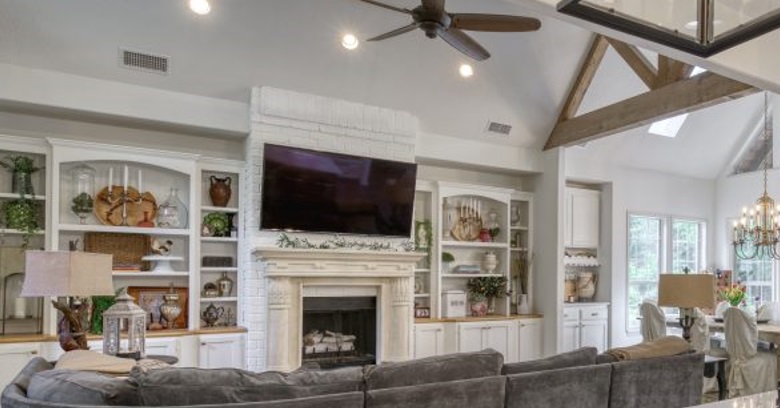
Looking for Whole Home Remodeling Contractors in Bryan Texas?
Good Company Construction manages the design, the trades, and the schedule on larger home projects within Bryan Texas residents.
Reach out at 979-401-2527 to talk through what you want built or changed.
What a General Contractor Actually Does
Most homeowners comparing Whole Home Remodeling Contractors in Bryan Texas finds that one name stands for many different tasks. The contractor of record carries responsibility for how everything fits together. It sequences the subcontractors so they do not collide, and it spares the owner from refereeing between trades.
That is a different job from doing any single trade, and it is learned on job sites, not on paper. Each trade needs real experience in its own area, but a project fails or succeeds on how well they fit together. With Whole Home Remodeling Contractors, Good Company Construction keeps one master plan that every trade works from, and the plan stays in one place where every trade can see it.
One Team or Two? How Project Delivery Is Set Up
On a design-build project, the same firm handles both the design and the construction. The advantage is that building questions get asked while the plans are still easy to change, and the owner deals with one point of contact.
A second route is to have the drawings made by one party and built by another, and some owners find it more familiar. The design stands on its own as a finished package, which appeals to owners with a strong design in mind. Each approach fits some projects and not others, and a conversation about Whole Home Remodeling Contractors in Bryan Texas can start from either one.
What an Addition Changes About a House
A bump-out or added wing has to be joined to a house that was built to different standards. A new slab or pier line must be made compatible with the existing foundation, and where the two roofs meet is a classic spot for leaks if it is rushed. The existing equipment may or may not be enough for the added space, and the result affects comfort for years.
The frame carries the whole job, and the rest of the job depends on it. Plumb, level, and square framing make trim, cabinets, and doors fit without fuss. Experienced carpenters will tell you, and the answer is that corrections get harder with every layer that goes on top.
Making an Addition Look Like It Was Always There
A new room that works inside the house may look foreign from the street, when the roof pitch, siding, and window style were not carried through. Old siding and brick fade in the sun, which makes a perfect match difficult, and the choice is better made in the plan than on site.
Rooflines are where an addition most often gives itself away, and the junction between old and new deserves extra attention. Repeating the existing slope, overhang, and trim lines pulls the two parts together, and it makes the rainwater path easier to manage.
Behind the Walls: Systems That Must Handle More
Existing equipment was matched to the original square footage, and it is a point worth raising early. A cooling system that kept the old rooms comfortable might struggle with a larger home through a long summer, and it is usually easier to plan for that during design than to correct it afterward. Panels and pipes also have limits that an addition can reach, and the answer shapes the plan.
When the Scope Is Every Room
A project that reshapes the whole house asks the owner to think about how every space works together. Staying put is often possible for phased work and harder for a full gut, and the sequence of rooms is chosen with it in mind.
Houses of a certain age may hold hidden conditions, and it is easiest to handle with a flexible plan. Past repairs, past additions, and past shortcuts are all common finds. Telling the owner early that surprises are possible keep a large project from turning into a dispute.
The Approval Side of an Addition or Remodel
When a home project involves walls, additions, or systems, the more likely drawings have to be approved before work starts. What applies to a lot in town may not apply in the country, and the person responsible for the job usually applies. Neighborhood rules on color, height, and materials can shape what is allowed, and a builder familiar with the process can help.
How to Tell Whether a Contractor Is the Right Fit
Hiring for a project that touches structure and systems comes down to both the formal side and the working relationship. Ask who pulls the permits and who calls for the inspections, and ask which parts of the work are done by the contractor's own people and which go to subcontractors.
Check that the credentials the local office expects are in place, and get the list of what is included, and what is not, set out in plain words. A contractor with a steady process tends to have a system behind the answers.
How a Larger Project Is Scheduled and Staged
Scheduling starts from the end date and works back through each phase, and the longest wait sets the pace for the rest. Made-to-order items and engineered framing members have their own delivery timelines, so lead times are tracked from the first week.
For projects with the owners at home, staging becomes important. Dust barriers, a path for workers, and a clear plan for the kitchen and bathrooms help a family get through the weeks of construction. People who talk it over with the builder first tend to find a larger project far easier to live with.
Keeping Decisions Moving From Plan to Punch List
A larger project asks the owner to choose many things, and most owners enjoy it more when it is organized. The visible selections that give a project its character must be decided ahead of the day they are needed. A contractor who lays out those dates at the start turns a long list into a manageable one.
A well-prepared drawing package works as a tool as well as a requirement, and they are the reference for every decision on site. Layouts, dimensions, and notes on the pages guide each trade through its part, so a set that leaves gaps tends to produce mistakes in the field.
The Last Phase of a Contractor's Job
When the building work wraps up, there is a walk-through, room by room. Any touch-ups are written down and completed before the job is closed, and the local building office completes its last check.
For anyone in Bryan Texas with a project involving Whole Home Remodeling Contractors, Good Company Construction is ready to discuss how the project would be organized from start to finish. Phone 979-401-2527 to talk it over.
Verified

Verified
Verified
Verified
Verified