
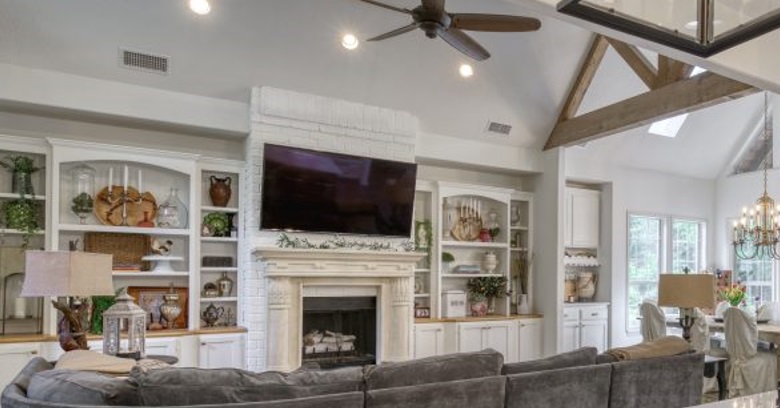
Ready to talk with Home Remodel Services in Greater Bryan-College Station Area?
Good Company Construction manages the design, the trades, and the schedule on larger home projects across Greater Bryan-College Station Area homeowners.
Phone 979-401-2527 to describe the project you are picturing.
The Role Behind the Name on the Truck
A homeowner who starts by searching for Home Remodel Services in Greater Bryan-College Station Area quickly finds that the role is bigger than it sounds. The contractor of record carries responsibility for how everything fits together. It sequences the subcontractors so they do not collide, and it holds the overall plan so the owner does not have to.
The work is management as much as building, and it is the part owners tend to underestimate. Carpentry, mechanical, and finish work are separate crafts, and the success of the job rests on the handoffs between them. With Home Remodel Services, Good Company Construction keeps one master plan that every trade works from, and owners feel the difference in how few calls they have to make.
Who Draws the Plans, and Who Builds Them
On a design-build project, a single contract covers the drawings and the work. It means the people who will build it help shape what gets drawn, and there is one place to go when a detail has to change.
Some owners prefer to have the plans drawn independently, and it gives the owner two points of view. The owner gets a complete set of drawings that any contractor can build from, which suits owners who want an independent designer with a particular vision. It comes down to what the owner values most, and the choice rarely stops a project involving Home Remodel Services from moving forward.
Tying New Space Into an Existing Home
An addition to an existing home ties into foundation, framing, roof, and mechanical systems that were set years before. The new base and the old base need to behave as one in clay soil, and where the two roofs meet is a classic spot for leaks if it is rushed. The air conditioner and ductwork may need to grow with the house, and it is a conversation worth having early.
Everything else in an addition rests on the frame, and the rest of the job depends on it. Plumb, level, and square framing pay off later when cabinets and trim go in. Framers and finish carpenters agree, and they will say that rushed framing shows up as problems in every phase afterward.
Matching the New Work to the Old House
A new room that works inside the house may look foreign from the street, when the exterior details were chosen separately. Old siding and brick fade in the sun, which makes a perfect match difficult, and a good plan decides whether to match, blend, or deliberately contrast.
Rooflines are where an addition most often gives itself away, and it is easy to see from the street. Keeping the same slope and overhang makes the whole building read as one design, and it keeps the roof shedding water in a predictable way.
Behind the Walls: Systems That Must Handle More
Existing equipment was matched to the original square footage, and the same thinking applies to every system in the house. Long hot summers put the most strain on cooling, so capacity is worth checking early, and a builder can have the equipment evaluated before the walls go up. Wiring and plumbing have capacity limits of their own, and the answer shapes the plan.
Bigger Scope, Bigger Planning Needs
A whole-home remodel, makeover, or redesign needs a plan for how the house will be lived in during the work. Whether the household stays or goes depends on the scope, and the plan is shaped accordingly.
The older the house, the more likely something unexpected waits behind a wall, and experienced builders plan for that. Systems that were adequate for older habits but not for current ones should be treated as possibilities from the start. Telling the owner early that surprises are possible keep the relationship between owner and builder on solid ground.
The Approval Side of an Addition or Remodel
When a home project involves walls, additions, or systems, the more likely the local building office needs to see plans. Local offices set their own list of what needs approval, and the contractor of record normally takes care of pulling them. Associations often want to see plans for exterior work first, and the rules are usually easy to obtain from the association.
What to Ask When You Compare Contractors
Deciding who should manage a home project should weigh how the work will be run as well as who runs it. Ask which party deals with the city or county and the homeowners association, and ask which parts of the work are done by the contractor's own people and which go to subcontractors.
Ask to see the paperwork the town requires, and make sure the description of the work and the order of events are on paper. Someone who has run many larger projects can generally explain how each one is handled.
Planning Phases So the Household Can Keep Functioning
The calendar for an addition starts with whatever has the longest lead time, and the longest wait sets the pace for the rest. Made-to-order items and engineered framing members have their own delivery timelines, so lead times are tracked from the first week.
For projects with the owners at home, the staging plan matters more. Clear boundaries between the work area and the living area reduce the strain on a household living beside a job site. People who talk it over with the builder first get through the work with fewer frustrations.
Why Early Decisions Make for a Smoother Build
Every addition or remodel involves a long list of choices, and a little preparation makes it much easier. The visible selections that give a project its character all carry deadlines that are set by delivery times. Contractors who list the choices and their due dates makes it easy to see what is coming.
The plans are the shared language of the whole project, and well-prepared drawings save time. Framers use them to lay out walls, electricians to place outlets, and plumbers to route supply and drain lines, so unclear plans lead to questions on site, repeated trips back to the drawings, and avoidable delays in the schedule.
Closing Out an Addition or Remodel
When the last trade has finished, the contractor and the owner inspect the finished project side by side. Small items that are off are noted and corrected, and the town's final inspection signs off on the building work.
For homeowners ready to move ahead with Home Remodel Services around Greater Bryan-College Station Area, Good Company Construction is ready to discuss how the project would be organized from start to finish. Call 979-401-2527 to describe the home you have in mind.