
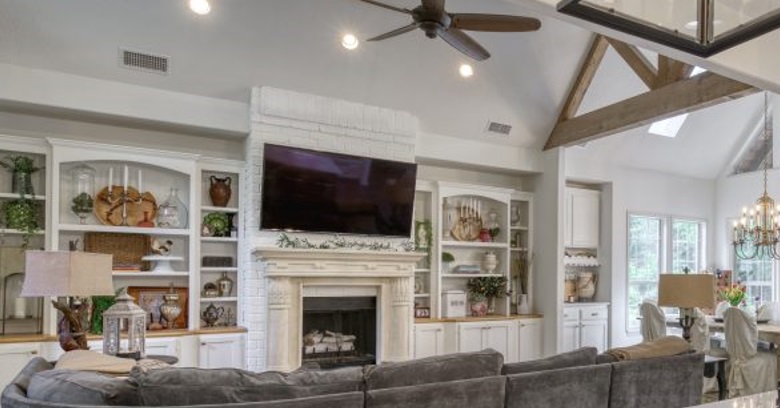
Trying to find Whole Home Makeover Companies in Greater Bryan-College Station Area?
Good Company Construction manages the design, the trades, and the schedule on larger home projects within Greater Bryan-College Station Area homeowners.
Reach out at 979-401-2527 to ask how a project like yours would be run.
A General Contractor Is the Hub of the Whole Project
People who look into Whole Home Makeover Companies in Greater Bryan-College Station Area soon learns that the title covers a lot of ground. A single contractor is accountable for the project as a whole. It sequences the subcontractors so they do not collide, and it holds the overall plan so the owner does not have to.
It sits above the individual trades rather than beside them, and the difference shows in how a project runs. Every trade has its own tools, methods, and rules, and the success of the job rests on the handoffs between them. Good Company Construction builds its approach to Whole Home Makeover Companies around that coordination, and that focus is what holds a larger project together.
One Team or Two? How Project Delivery Is Set Up
When a project is delivered design-build, the designer and the builder work as one group from the start. It means the people who will build it help shape what gets drawn, and the owner deals with one point of contact.
The other path is a separate designer and builder, and it divides the work in a clear way. The owner gets a complete set of drawings that any contractor can build from, which fits owners who want to settle the design before choosing who builds it. Neither path is better in every case, and a conversation about Whole Home Makeover Companies in Greater Bryan-College Station Area can start from either one.
Adding Space Means Changing the Structure
An addition to an existing home is not a freestanding building. The new foundation has to work with the old one, and where the two roofs meet is a classic spot for leaks if it is rushed. Cooling load rises with every added room, and a hot summer shows it, and it is a conversation worth having early.
Everything else in an addition rests on the frame, and it is the stage where accuracy counts most. Careful layout, accurate cuts, and checked measurements make every later trade's work easier. Framers and finish carpenters agree, and they will say that a poor frame is hard to hide.
Making an Addition Look Like It Was Always There
Quality work can still look like an afterthought, if nobody took the time to match the original lines. After years of sun, an older exterior has a different tone than new material, and a thoughtful builder talks through those options with the owner.
How the new roof meets the old one is what the eye catches, and it is worth planning before the framing starts. Carrying the original pitch and overhang through to the new section keeps the house balanced, and it also helps water drain the way the original roof was designed to.
What the Existing Systems Can and Cannot Carry
Every added room puts more demand on systems that were sized for the original house, and it adds up faster than most owners expect. Cooling capacity tends to be the system that shows a shortfall soonest, and it is usually easier to plan for that during design than to correct it afterward. Panels and pipes also have limits that an addition can reach, and it is part of every careful addition plan.
When the Scope Is Every Room
Work that touches every room needs a plan for how the house will be lived in during the work. Some owners stay in the house during the work, and others move out, and the plan is shaped accordingly.
Previous owners may have changed things in ways that are not on any plan, and experienced builders plan for that. Systems that were adequate for older habits but not for current ones are usually discovered during demolition. Setting expectations before the walls are opened make a whole-home project easier on everyone.
Why Permits Matter More as the Work Gets Bigger
When a home project involves walls, additions, or systems, the more probable it becomes that inspections apply. Local offices set their own list of what needs approval, and the contractor of record normally takes care of pulling them. Homes in an association also answer to its design rules, and it is wise to ask before anything is purchased.
What to Ask When You Compare Contractors
Hiring for a project that touches structure and systems is partly a question of paperwork and partly a question of fit. Find out who is responsible for permits, inspections, and the final sign-off, and ask who will be on the job day to day and who the owner can reach.
Ask to see the paperwork the town requires, and ask for the scope, the schedule, and any changes to them to be put in writing. Firms that organize their work well can generally explain how each one is handled.
How a Larger Project Is Scheduled and Staged
Good schedules begin with the items that cannot be rushed, and the date for each phase follows from it. Items ordered to size often arrive long after standard stock does, so the sequence of purchases is planned alongside the sequence of work.
If nobody moves out, work areas are separated from living areas. Dust barriers, a path for workers, and a clear plan for the kitchen and bathrooms make it practical to stay home while work goes on. Households that think it through before the work starts tend to find a larger project far easier to live with.
The Owner Role in a Project That Runs on Time
Every addition or remodel involves a long list of choices, and a little preparation makes it much easier. Tile, lighting, paint colors, and plumbing fixtures have decision dates that work backward from the schedule. A clear list of selections with dates attached helps everyone know what has to be done next.
Drawings are what every trade reads before it starts, and gaps in the plans come back as questions. Each specialist pulls different information from the same sheets, from wall locations to fixture positions, so the quality of the drawings shows up in how the work goes.
From Final Inspection to the Final Walk-Through
At the end of a larger project, a final look at every part of the work takes place with the owner. Whatever is not right gets fixed before the project is called done, and the local building office completes its last check.
For homeowners ready to move ahead with Whole Home Makeover Companies around Greater Bryan-College Station Area, Good Company Construction is a good place to begin a conversation about your plans. Get in touch at 979-401-2527 to begin sorting out the first steps.