
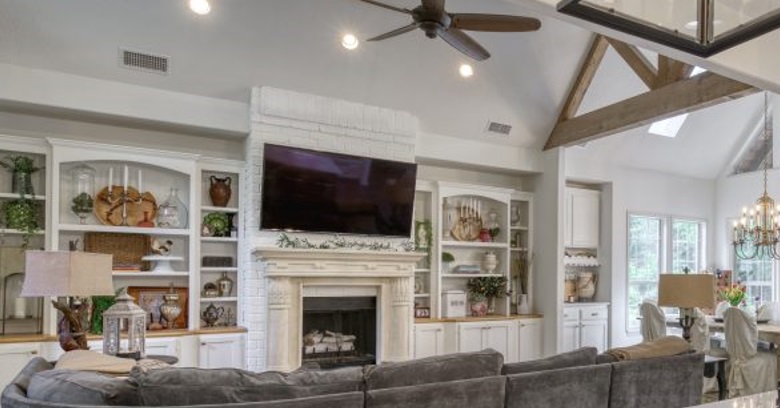
Thinking of hiring help with Whole Home Remodeling Contractors in Greater Bryan-College Station Area?
Good Company Construction acts as the general contractor on additions, remodels, and whole-home projects around Greater Bryan-College Station Area property owners.
Ring 979-401-2527 to describe the project you are picturing.
The Role Behind the Name on the Truck
People who look into Whole Home Remodeling Contractors in Greater Bryan-College Station Area discovers that the job description is wider than most expect. A general contractor holds the contract for the whole project. The same contractor brings in the framers, electricians, plumbers, and finishers at the right times, and it keeps the pieces consistent from one trade to the next.
That is a different job from doing any single trade, and it is what many owners are really paying attention to. Every trade has its own tools, methods, and rules, but a project fails or succeeds on how well they fit together. Good Company Construction treats Whole Home Remodeling Contractors as a coordination job first and a building job second, and owners feel the difference in how few calls they have to make.
Choosing How the Design and the Building Are Organized
On a design-build project, the designer and the builder work as one group from the start. Practical building knowledge goes into the drawings from the first sketch, and the owner deals with one point of contact.
Some owners prefer to have the plans drawn independently, and some owners find it more familiar. The plans become a document that several contractors can study, which suits owners who want an independent designer with a particular vision. It comes down to what the owner values most, and the choice rarely stops a project involving Whole Home Remodeling Contractors from moving forward.
Adding Space Means Changing the Structure
A home addition ties into foundation, framing, roof, and mechanical systems that were set years before. A new slab or pier line must be made compatible with the existing foundation, and where the two roofs meet is a classic spot for leaks if it is rushed. The existing equipment may or may not be enough for the added space, and the answer should come before the plans are final.
Good framing is what makes the rest of an addition go right, and it is worth watching closely. Plumb, level, and square framing pay off later when cabinets and trim go in. Ask anyone in the trades, and the point is that mistakes in the frame travel all the way to the paint.
Matching the New Work to the Old House
A structurally sound addition may stand out from the rest of the house, when the exterior details were chosen separately. Weathered exterior materials rarely match fresh ones perfectly, and the owner should see the options before anything is ordered.
Pitch, ridge height, and overhang tell the eye whether the new part belongs, and it is worth planning before the framing starts. Repeating the existing slope, overhang, and trim lines pulls the two parts together, and it makes the rainwater path easier to manage.
Heating, Cooling, Electrical, and Plumbing Need a Second Look
A house is sized as a system, and an addition changes the total, and it is a point worth raising early. Cooling capacity tends to be the system that shows a shortfall soonest, and it is much easier to run new ducts while the framing is open. Electrical service and water supply need to be checked for capacity too, and it is part of every careful addition plan.
Bigger Scope, Bigger Planning Needs
Work that touches every room needs a plan for how the house will be lived in during the work. Some owners stay in the house during the work, and others move out, and the contractor can stage the rooms to leave a kitchen or bathroom usable as long as possible.
A house that has been in the neighborhood a long time often has a history behind its walls, and it is easiest to handle with a flexible plan. Past repairs, past additions, and past shortcuts are all common finds. Telling the owner early that surprises are possible help the whole job go more smoothly.
Drawings and Approvals Before Anything Is Built
Once a project goes beyond cosmetic updates, the more probable it becomes that inspections apply. Local offices set their own list of what needs approval, and the general contractor is the one who deals with the office. Subdivision rules may add an extra step, and skipping the step can force changes later.
The Conversation to Have Before the Work Begins
Picking a contractor for an addition or remodel should weigh how the work will be run as well as who runs it. Find out who is responsible for permits, inspections, and the final sign-off, and ask who will be on the job day to day and who the owner can reach.
It is reasonable to ask for whatever the city or county requires to be shown, and see that the work and the calendar are described in a document both sides can read. A contractor who answers these questions easily tends to have a system behind the answers.
How a Larger Project Is Scheduled and Staged
A schedule for a larger project is built backward from the items that take the longest, and everything else is arranged around it. Items ordered to size often arrive long after standard stock does, so the buying schedule and the building schedule move together.
When the home remains occupied, the project is usually organized in phases. Clear boundaries between the work area and the living area turn a disruptive project into a manageable one. People who decide in advance how they will manage handle the weeks of construction with less stress.
Owner Choices That Keep a Project on Schedule
Every addition or remodel involves a long list of choices, and the choices add up over a few weeks. Tile, lighting, paint colors, and plumbing fixtures all need to be chosen with enough lead time to arrive when the trades need them. Contractors who list the choices and their due dates helps everyone know what has to be done next.
A well-prepared drawing package works as a tool as well as a requirement, and the quality of the set shows throughout the job. Layouts, dimensions, and notes on the pages guide each trade through its part, so time spent on the drawings pays off in fewer stops during construction.
The Last Phase of a Contractor's Job
When the last trade has finished, the owner and the contractor go through the space together. Anything that needs attention goes on a short list and gets handled, and the final inspection from the local office closes out the permit.
For Whole Home Remodeling Contractors in Greater Bryan-College Station Area, Good Company Construction can walk through how a project like yours would be planned and staged. Call 979-401-2527 to get the conversation started.