
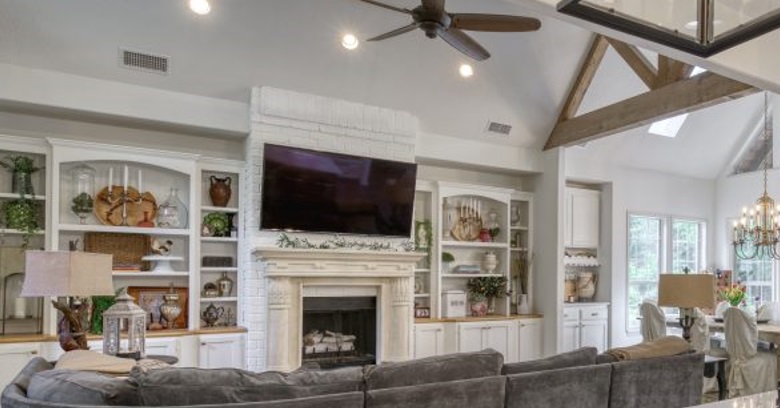
Ready to talk with Whole Home Remodeling Services in Greater Bryan-College Station Area?
Good Company Construction acts as the general contractor on additions, remodels, and whole-home projects within Greater Bryan-College Station Area households.
Phone 979-401-2527 to describe the project you are picturing.
What a General Contractor Actually Does
A homeowner who starts by searching for Whole Home Remodeling Services in Greater Bryan-College Station Area discovers that the job description is wider than most expect. A general contractor holds the contract for the whole project. The same contractor brings in the framers, electricians, plumbers, and finishers at the right times, and it stands behind how the finished work fits together.
It sits above the individual trades rather than beside them, and it calls for a different set of skills. Framing, wiring, plumbing, and finishing each take skill, but a good result depends mostly on timing and coordination. Good Company Construction builds its approach to Whole Home Remodeling Services around that coordination, and the plan stays in one place where every trade can see it.
Two Common Paths From Idea to Finished Home
When a project is delivered design-build, the designer and the builder work as one group from the start. Problems of structure, access, and sequence surface during design, not after it, and decisions move faster because nobody is passing the plans back and forth.
The alternative is to hire an architect or designer first, and some owners find it more familiar. That produces a full set of plans that can be shared with different builders, which makes sense when the architecture is the main goal. It comes down to what the owner values most, and a good contractor can explain how Whole Home Remodeling Services would work in either setup.
Adding Space Means Changing the Structure
A home addition ties into foundation, framing, roof, and mechanical systems that were set years before. The new foundation has to work with the old one, and the roofline has to be tied in so water sheds properly. Heating and cooling capacity also deserves a second look, and it is a conversation worth having early.
The frame carries the whole job, and it is rarely the part owners photograph. Plumb, level, and square framing pay off later when cabinets and trim go in. Anyone who has worked on a job site will say, and the lesson is that time spent on the frame is time saved on the finish.
Siding, Rooflines, and Windows: Where New Meets Existing
A structurally sound addition may stand out from the rest of the house, when the exterior details were chosen separately. After years of sun, an older exterior has a different tone than new material, and a thoughtful builder talks through those options with the owner.
Pitch, ridge height, and overhang tell the eye whether the new part belongs, and it is easy to see from the street. A roof that matches in slope and eave depth looks natural, and it avoids the kind of junction that leaks after a big storm.
Mechanical Systems Have to Grow With the House
Existing equipment was matched to the original square footage, and the numbers should be checked, not assumed. A cooling system that kept the old rooms comfortable might struggle with a larger home through a long summer, and it is far simpler to size equipment on paper than to replace it later. Panels and pipes also have limits that an addition can reach, and the findings go into the scope of work.
Thinking Through a Project That Touches the Whole House
A project that reshapes the whole house turns on how rooms connect, not just how each one looks. Living in the home during construction is possible for some projects, and the schedule should reflect that choice from day one.
Houses of a certain age may hold hidden conditions, and a candid conversation early helps. Past repairs, past additions, and past shortcuts are better expected than hoped against. A schedule that leaves room for what turns up make a whole-home project easier on everyone.
Drawings and Approvals Before Anything Is Built
The more the work changes, the more important it is to learn what the town requires. What applies to a lot in town may not apply in the country, and the contractor of record normally takes care of pulling them. An HOA can require approval of exterior changes before permits are even requested, and that approval can take a while.
Questions Worth Asking Before You Choose a Contractor
Choosing who will run a larger project should weigh how the work will be run as well as who runs it. Find out who is responsible for permits, inspections, and the final sign-off, and ask how the trades are lined up and who supervises them on site.
Owners should expect to be able to confirm that the local paperwork is handled, and make sure the description of the work and the order of events are on paper. Firms that organize their work well will often have a ready answer for every item.
Building the Calendar for an Addition or Whole-Home Project
The calendar for an addition starts with whatever has the longest lead time, and the date for each phase follows from it. Windows, doors, cabinets, and structural components can take weeks to arrive, so lead times are tracked from the first week.
If nobody moves out, work areas are separated from living areas. Clear boundaries between the work area and the living area turn a disruptive project into a manageable one. Owners who prepare for this ahead of time tend to find a larger project far easier to live with.
Selections and Approvals: What the Owner Decides, and When
Owners of a bigger job make dozens of selections, and a little preparation makes it much easier. Tile, lighting, paint colors, and plumbing fixtures all carry deadlines that are set by delivery times. A contractor who lays out those dates at the start makes it easy to see what is coming.
A well-prepared drawing package works as a tool as well as a requirement, and they are the reference for every decision on site. Layouts, dimensions, and notes on the pages guide each trade through its part, so the clearer the plans, the smoother the build.
Closing Out an Addition or Remodel
When the last trade has finished, each finished area gets checked one by one. Small items that are off are noted and corrected, and the permit is finished once the inspector approves.
For Whole Home Remodeling Services in Greater Bryan-College Station Area, Good Company Construction is ready to discuss how the project would be organized from start to finish. Phone 979-401-2527 to begin sorting out the first steps.